BANGLADESH GARMENT SOURCING

Your Trusted Garment Sourcing Partner in Bangladesh

Spider Textile connects global fashion brands with reliable garment manufacturers in Bangladesh. As a 10 years experienced garment sourcing company in Bangladesh, we provide complete sourcing solutions from supplier selection and product development to quality inspection and shipment coordination.

Diverse fabric rolls.
BRANDED SURPLUS SOURCING

Authentic Branded Surplus Apparel from Bangladesh

Spider Textile sources high-quality branded surplus garments from trusted manufacturers in Bangladesh. We help wholesalers, retailers, and importers access genuine surplus stock at competitive prices with reliable quality and export support.

Diverse fabric rolls.
QUALITY ASSURANCE

Our Best Quality You Can Trust at Every Stage

At Spider Textile, quality is built into every step of the sourcing process. We implement comprehensive quality control procedures to ensure consistent craftsmanship, accurate specifications, and defect-free garments before shipment.

Garment manufacturing facility.
0 Y+
Company Tenure
0 Y+
Founder's Experience
0 +
Export Destinations
0 +
Buyer
0 +
Sourcing Factories
ABOUT US

Your Trusted Source for Branded Surplus Garments from Bangladesh.

Spider Textile is a Bangladesh-based ready-made garments exporter specializing in surplus branded stock lot apparel. We connect international importers, wholesalers, retailers, and online sellers with high-quality surplus garments sourced directly from leading export-oriented garment factories in Bangladesh.

Our extensive sourcing network allows us to offer a wide range of authentic surplus stock, including men's, women's, and kids' apparel across knit, woven, denim, sweater, and outerwear categories. We regularly update our inventory with branded export surplus, giving buyers access to premium-quality garments at highly competitive prices.

Foreign buyers can browse our available stock lots and submit inquiries based on their product requirements. Once the requested items are matched with our inventory, we provide detailed product information, samples (if required), competitive pricing, and complete export documentation. After order confirmation, Spider Textile manages the entire export process, ensuring secure packaging, timely shipment, and reliable delivery to destinations worldwide.

Our commitment to quality, transparency, and efficient service has made Spider Textile a trusted sourcing partner for businesses seeking branded surplus garments from Bangladesh. Whether you're looking for small mixed lots or large-volume shipments, we are dedicated to delivering value, consistency, and long-term business relationships.

Talk to Our Team
All Categories

Explore Our Garment Product Categories

Discover a wide range of apparel categories sourced through our trusted garment manufacturing network in Bangladesh. From everyday essentials to seasonal collections, we help global brands develop quality garments with reliable production support.

Spider Textile Video Thumbnail
Owner's Introduction

Building Trust Into Every Stitch, Shipment, and Relationship

It is my pleasure to welcome you to Spider Textile, a trusted exporter of surplus branded ready-made garments from Bangladesh. Our mission is simple to connect international buyers with high-quality branded surplus apparel through a transparent, reliable, and efficient sourcing process. Bangladesh is one of the world's leading garment manufacturing countries, producing apparel for many renowned global brands.

Every year, a significant volume of export-quality surplus garments becomes available due to order adjustments, excess production, or buyer cancellations. At Spider Textile, we carefully source these products from reputable export-oriented factories, ensuring that our customers receive authentic, premium-quality garments at competitive prices

Masud Islam Owner (Spider Textile)
See Our Sourcing Approach
Managing Director Spider Textile
Our Core Services

Built Around Your Supply Chain.

How An Order Moves

The Same Five Stitches, Every Order

01

Receiving Query

Design & Development, Technical Analysis.

02

Order & Execution

Sample Approvals, Supply Chain Management

03

Quality Assurance

Pre-Production Meetings, Initial Production Check.

04

Shipping & Logistics

Shipment Tracking, Performance Survey.

05

After Sales Service

Shipment Tracking, Order Feedback.

Responsibility

Progress You Can Trace

At Spider Textile, responsibility is at the core of everything we do. We are committed to ethical business practices, respecting human rights, supporting responsible sourcing, and promoting environmental sustainability. These principles guide our operations and help us build trusted, long-term partnerships with customers around the world.

Spider Textile Responsibility

Frequently Asked Question

FAQ
Spider Textile FAQ

How can we help you?

Everything You Need to Know Before Starting Your Manufacturing Journey with Spider Textile

All FAQ
What are your Minimum Order Quantities?

Spider Textile works with MOQs starting from small mixed lots up to large volume bulk orders, depending on the product category and manufacturer. As a Bangladesh-based garment sourcing company, we match your order size to factories that can accommodate it, whether you're an emerging brand or an established importer.

Can we visit your office for a physical meeting?

We warmly welcome buyers to visit our office for in-person meetings. During your visit, we can discuss your sourcing requirements in detail, introduce you to our manufacturing network, and explain our quality control. We are committed to providing a transparent and reliable sourcing experience, helping international brands confidently source high-quality garments from Bangladesh.

Do you deal with Quality Control?

We closely monitor workmanship, measurements, fabric quality, trims, labeling, packaging, and overall product compliance before shipment. By working directly with trusted manufacturing partners and maintaining regular factory oversight, we help minimize defects, ensure consistency, and deliver products that meet your quality expectations.

Can I ensure my designs aren't stolen or copied?

We work under confidentiality practices with our factory network, and buyers can request NDAs before sharing designs or tech packs. As a sourcing partner, protecting client designs is essential to maintaining long-term brand relationships.

What types of fabrics are you able to source?

We source woven, denim, knit, and sweater fabrics across menswear, womenswear, boys', and girls' categories, covering both everyday essentials and seasonal collections.

Testimonials

Our Satisfied Clients

We are impressed with the quality and reliability of Spider Textile. Their sewing threads offer excellent durability and perfect stitching performance for our clothing manufacturing operations. The team always provides outstanding support and service.

07 September, 2025

Emma Williams

Sourcing Manager, United Kingdom

Spider Textile delivers exceptional quality sewing threads that meet international garment production standards. Their spun polyester threads provide excellent strength, smooth performance, and consistent results. Their professional service and reliable deliveries make them a valuable business partner.

18 October, 2025

Michael Anderson

Apparel Production Director, USA

Spider Textile has been a trusted supplier for our garment business. Their premium polyester threads ensure strong seams and smooth production processes. Their commitment to quality and timely shipment is truly appreciated.

25 November, 2025

Lukas Schneider

Manufacturing Coordinator, Germany

The sewing threads from Spider Textile are consistently high quality and reliable. Their products perform exceptionally well in large-scale apparel production, and their customer service team is always responsive and professional.

12 August, 2025

Sophie Martin

Textile Purchasing Manager, France

Spider Textile provides excellent thread solutions for the fashion industry. Their products offer superior strength, smooth sewing capability, and dependable quality. We highly recommend them as a reliable manufacturing partner.

30 October, 2025

Daniel Rossi

Garment Operations Manager, Italy

We have experienced great satisfaction working with Spider Textile. Their sewing threads maintain excellent consistency and help us achieve high-quality garment finishing. Their delivery performance and service are outstanding.

16 July, 2025

Olivia Brown

Supply Chain Specialist, Australia

Spider Textile offers world-class sewing threads with excellent durability and performance. Their products support our production efficiency, while their professional approach ensures a smooth business relationship.

09 November, 2025

Carlos Martinez

Production Manager, Spain

The quality of Spider Textile sewing threads is remarkable. Their spun polyester threads provide excellent sewing results with strong and clean finishing. We appreciate their dedication to customer satisfaction.

21 February, 2026

Yuki Tanaka

Textile Industry Consultant, Japan

Spider Textile has proven to be a dependable supplier of high-quality sewing threads. Their products meet our expectations for strength, consistency, and professional garment manufacturing requirements.

12 January, 2026

William Thompson

Procurement Director, Canada

We value our partnership with Spider Textile due to their excellent product quality and reliable service. Their sewing threads are durable, efficient, and perfectly suited for modern apparel production.

21 March, 2026

Anna Müller

Fashion Manufacturing Executive, Switzerland

Satisfied client
Latest News

Our Latest News And Updates

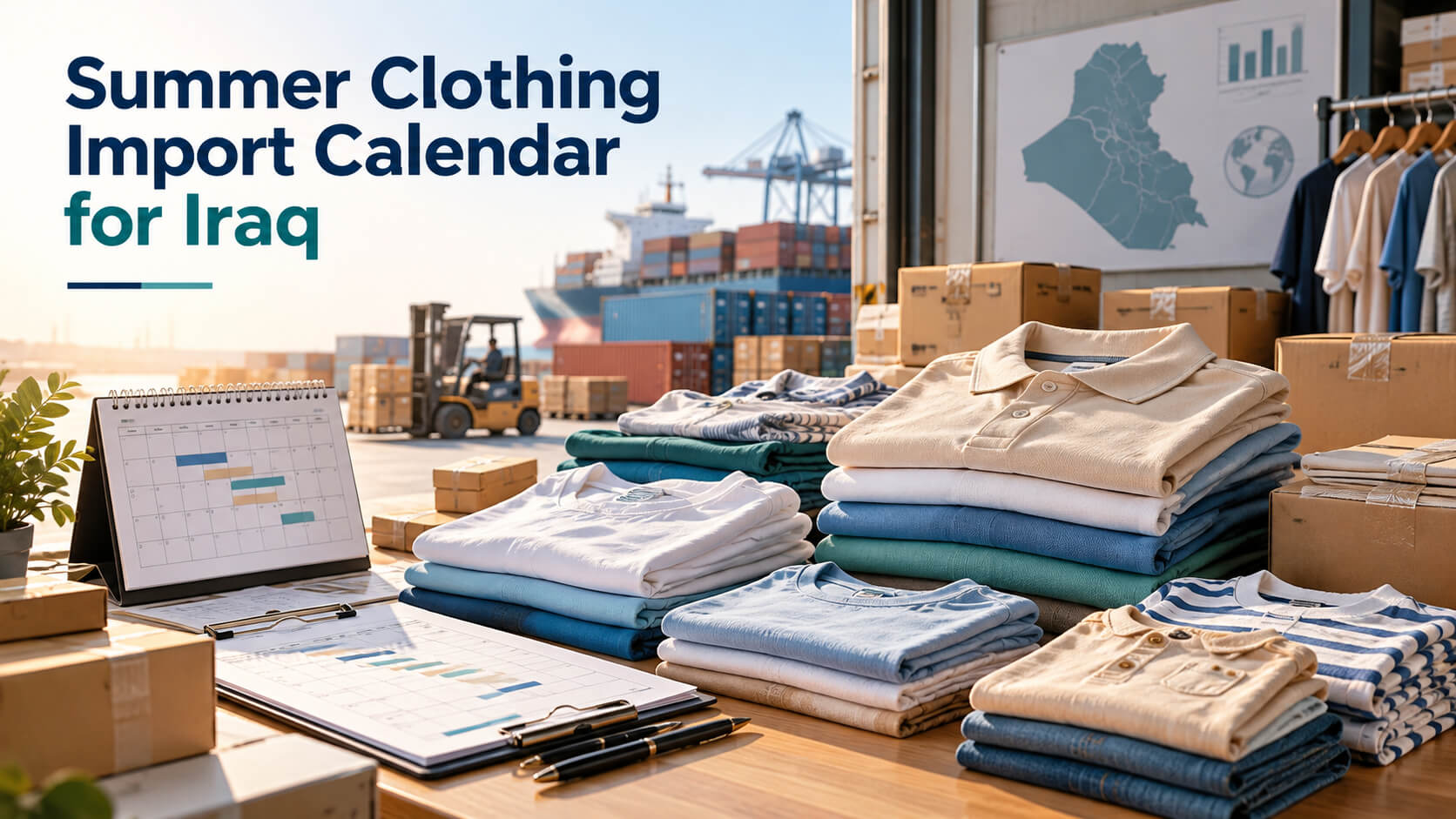
Summer Clothing Import Calendar for Iraq | Spider Textile 15 October, 2026

Summer Clothing Import Calendar for Iraq | Spider Textile

Start planning summer clothing imports to Iraq in the previous autumn, approve suppliers and samples during winter, and arrange initial deliveries before your intended selling season. The exact ordering deadline depends on your destination, garment specifications, production capacity, shipping route, and clearance requirements, not a single nationwide date. Iraq's lowland summer generally runs from May to October, while northeastern higher-elevation areas have a shorter summer, making destination-specific planning important. For wholesalers, distributors, and retail buyers, the most important date is warehouse arrival: when inspected, cleared merchandise reaches the location from which you can actually distribute or sell it. This guide provides a practical summer clothing import calendar for Iraq, with planning considerations for Baghdad, Basra, Erbil, Sulaymaniyah, and other Iraqi markets. The calendar is an illustrative procurement framework, not a guaranteed production or shipping schedule. What Is a Summer Clothing Import Calendar? A summer clothing import calendar is a backward-planned schedule connecting your selling season to sourcing, sampling, production, inspection, certification, shipping, and delivery. It answers five commercial questions: When must the clothing reach your warehouse? When must the supplier finish production? When should samples and specifications be approved? Which documents and compliance checks must be completed before dispatch? When should you decide whether to replenish or stop buying? A useful calendar separates factory completion from shipment departure, customs release, and warehouse receipt. These are different milestones, and treating them as interchangeable can leave a retailer with stock that arrives too late to support the planned launch. For buyers sourcing from Bangladesh, Spider Textile publishes guidance on supplier selection, sampling, production monitoring, inspection, and written commercial terms, the same activities that need dated milestones in an import calendar. When Should You Start Summer Clothing Import Planning for Iraq? For made-to-order summer apparel, beginning in the previous autumn provides a structured opportunity to review demand, qualify suppliers, and develop samples. However, this is a planning recommendation, not a universal lead-time claim. Your actual deadline should come from confirmed quotations and a defined warehouse-arrival target. Work Backward From the Required Arrival Date Use this sequence: Set the required warehouse-receipt date. Confirm inland-delivery arrangements. Obtain a realistic clearance allowance from the appointed broker. Confirm transit and booking requirements with the freight forwarder. Schedule inspection and any required certification. Obtain the factory's production commitment. Allow time for sampling, revisions, and approvals. Add a contingency buffer appropriate to the order. Do not accept "delivery in April" without defining what delivery means. It could mean goods leaving the factory, reaching the destination port, or arriving at your warehouse. Separate Summer Planning From Promotional Events Ramadan, Eid, store promotions, and other sales events should have their own arrival targets where relevant. Verify the dates for the intended year and use your own sales history to assess demand. Do not assume that an event always coincides with summer or produces the same sales uplift in every Iraqi city. Month by Month Summer Clothing Import Calendar for Iraq The following calendar assumes an initial launch ahead of the lowland summer. Move the stages earlier or later according to your confirmed production and logistics requirements. Planning period Main activities Decision or deliverable September-October, previous year Review sales, returns, inventory, and destination demand Buying forecast and budget November-December Shortlist suppliers, request quotations, develop samples Supplier shortlist and sample plan January Approve specifications, size ratios, packaging, and terms Approved order documentation February Monitor production and confirm compliance responsibilities Production tracker and shipment checklist March-April Inspect goods, complete required certification and documents, dispatch Shipment ready against arrival target May-June Receive, allocate, and assess early sales Replenishment decisions July-August Review remaining demand and slow stock Controlled repeat orders or stock-exit plan September October: Review What Actually Sold Begin with evidence rather than assumptions. Review sales by garment category, size, color, selling location, and price point. Separate genuine product demand from promotional sales and clearance activity. A high-selling T-shirt is not automatically a profitable T-shirt if it generated substantial returns or required heavy discounting. Your initial buying brief should identify: Destination cities and warehouse addresses. Product categories and quantities. Target retail positioning. Fabric and construction requirements. Size and color ratios. Required arrival dates. Maximum acceptable landed cost. November December: Qualify Suppliers and Develop Samples Compare suppliers against the product you need, not simply their lowest quoted price. Spider Textile's sourcing guidance recommends checking product specialization, capacity, company credentials, quality systems, sampling, commercial terms, and communication before committing to bulk orders. Request samples that represent the proposed fabric, construction, fit, and trims. Document changes clearly so the approved version becomes the production reference. For ready-made stock lots, request a current inventory breakdown rather than relying on general catalogue photographs. January February: Approve the Order and Monitor Production Before production proceeds, record: Approved sample and specification version. Measurements and tolerances. Fabric composition. Colors and trims. Quantity by style and size. Labeling and packaging. Inspection arrangements. Payment and delivery terms. Corrective-action responsibilities. The useful question is not only "Has production started?" but "Which milestones have been completed, and what evidence confirms them?" A written tracker makes unresolved approvals visible before they affect the dispatch date. March April: Inspect and Prepare for Shipment Treat dispatch as a controlled decision, not an automatic next step. Check inspection findings, quantities, carton markings, documents, freight arrangements, and applicable conformity requirements. Intertek states that consignments containing regulated products require a Certificate of Conformity before shipment under its Iraq program; textile products appear among the regulated categories. Verify the exact product scope with the responsible provider before releasing goods. May August: Replenish Carefully Once stock arrives, monitor sales by destination rather than treating Iraq as one inventory pool. Replenishment should depend on actual sales, remaining selling time, available stock, supplier capacity, and delivery cost. A repeat order can have different lead times from the original shipment. Reconfirm availability and commercial terms instead of assuming the previous schedule still applies. How Iraq's Local Conditions Affect Summer Clothing Buying Climate helps establish the planning context, but it does not determine the complete assortment. Customer preferences, garment coverage, fit, fabric construction, price, and end use also matter. Baghdad and Central Iraq Baghdad's July and August mean daily temperatures are approximately 35°C, according to Britannica. This is a daily mean not an average daytime maximum and should be described accurately when used in buying discussions. For Baghdad buyers, evaluate proposed fabrics and garment designs against the intended use: everyday retail, workwear, children's clothing, casual basics, or another segment. Avoid approving "lightweight summer fabric" without an actual specification. Ask suppliers to state composition, fabric weight where relevant, construction, and agreed performance requirements. Basra and Southern Iraq Southern Iraq lies within the country's hot, arid lowland climatic region. That provides a reason to assess summer products carefully, but it does not justify assuming every Basra customer wants the same assortment. Obtain feedback from the actual distributor or retailer on garment coverage, fit, colors, and price positioning. Also confirm the final delivery address. A quotation ending at a port or border does not necessarily include transport to the buyer's warehouse. Erbil, Sulaymaniyah, and Higher-Elevation Destinations Britannica describes northeastern higher-elevation Iraq as having a shorter summer, generally June to September, with average temperatures approximately 3–6°C cooler than the lowlands. These regional figures should not be applied indiscriminately to every northern city or district. For buyers distributing across Erbil, Sulaymaniyah, and surrounding destinations, use separate sales forecasts where possible. The practical objective is to avoid allocating identical quantities and selling windows to markets with different customer demand. Clothing Sourcing Beyond the Main Cities An Iraq-focused import strategy should reflect actual delivery destinations, not a list of city names inserted for search rankings. Baghdad and Surrounding Buyer Destinations For orders serving Baghdad and surrounding destinations, identify whether stock will enter one central warehouse or move directly to several recipients. Record each delivery address, consignee, allocation, and acceptance process. A single national purchase order may still require several local distribution deadlines. Basra and Southern Distribution Buyers serving Basra, Najaf, and Karbala should maintain destination-level allocation plans. These are distinct markets, not interchangeable "nearby neighborhoods." Confirm which locations the logistics provider will deliver to and what each leg costs. Erbil and Wider Northern Coverage For Erbil, Sulaymaniyah, Mosul, and Kirkuk, confirm the order's actual destination and entry arrangements before finalizing compliance and freight assumptions. A city name alone is not sufficient to establish the applicable procedure, delivery timeline, or total cost. Spider Textile's published contact information places the business in Uttara, Dhaka, Bangladesh. Its Iraq-focused stock-lot guide describes support for Iraqi buyers, but that should not be presented as evidence of an Iraqi branch or local office. Documents and Compliance for Summer Clothing Imports to Iraq Document preparation should begin before the garments are ready to ship. A buying house can coordinate information, but the importer, customs broker, freight forwarder, and authorized certification provider have distinct responsibilities. Build a Shipment-Specific Document Checklist Ask the appointed professionals to confirm the required documents for the exact goods and route. The working file may include: Commercial invoice. Packing list. Relevant transport document. Certificate of origin. Product descriptions and technical details. Applicable testing evidence. Required conformity documentation. Intertek's Iraq certification application guidance requests product information, origin documentation, and evidence of compliance, with transport and other commercial documents included where available or applicable. Its list is a certification application guide, not a substitute for a complete customs checklist. Verify Certificate of Conformity Requirements A Certificate of Conformity, or CoC, confirms that regulated products meet the relevant technical requirements under the applicable assessment program. Intertek identifies textiles among Iraq's regulated product categories and warns that noncompliance can cause clearance delays, penalties, or returned shipments. Confirm: Whether the exact garment falls within current regulated scope. Which standards and tests apply. Who will submit the application? Who pays the associated costs. Whether the certificate will be completed before dispatch. Do not treat a factory's general statement that products are "export quality" as proof of destination compliance. What Does Summer Clothing Importing to Iraq Cost? There is no reliable universal import price without knowing the garment, quantity, commercial terms, route, destination, and applicable charges. The useful comparison is the landed cost, not factory price alone. What Is a Landed Cost? Landed cost is the total cost of bringing the goods to the agreed destination, including the relevant purchasing, logistics, and import expenses. Depending on the transaction, include: Garment purchase price. Buying-house or sourcing fee. Sampling and development. Inspection, testing, and certification. Origin transport and export handling. International freight and insurance. Applicable duties, taxes, and clearance charges. Storage and inland delivery. Spider Textile's stock-lot guidance similarly recommends evaluating product cost, freight, taxes, import fees, and storage before purchase. Compare Quotations on Equal Terms Two quotations are comparable only when their specifications and inclusions match. Record the Incoterm, named place, quantities, packaging, payment terms, quotation validity, and exclusions. A lower garment price may not produce a lower landed cost if it comes with expensive corrections, unsuitable size ratios, or additional delivery expenses. Do not use a flat online duty estimate as an official tariff. Obtain product-specific classification and current confirmation from a qualified customs professional. Made to Order Clothing vs Ready-Made Stock Lots Made-to-order production follows the buyer's approved specifications, while stock lots consist of garments that have already been produced. Spider Textile describes stock lots as surplus, cancelled-order, or excess inventory sold outside the normal production process. Factor Made-to-order apparel Stock-lot apparel Specifications Developed and approved before production Must be checked against existing goods Size and color ratios Negotiated within supplier constraints Limited by available inventory Branding Agreed as part of development Requires verification of existing labels and selling rights Calendar Includes sampling and manufacturing Still requires verification, inspection, compliance, and delivery planning Replenishment Depends on capacity and material availability Same stock may not remain available Stock lots can remove the need to manufacture the purchased inventory, but they do not eliminate shipment preparation or import checks. Inspect the actual lot and reconcile available quantities before committing. Real Evidence and Practical Buyer Scenarios A useful sourcing article should distinguish documented facts from examples. Spider Textile's published Iraq-focused stock-lot guide lists supplier research, stock verification, product inspection, price negotiation, export coordination, and buyer communication support. This is evidence of the company's stated offering not independent proof of a completed shipment or a guaranteed outcome. Illustrative Baghdad Scenario: The Wrong Delivery Milestone A Baghdad wholesaler needs clothing available for distribution in April, but the quotation promises an April factory dispatch. Those dates do not meet the same requirement. The buyer should obtain a complete route schedule and revise the order before approval. Illustrative Erbil Scenario: A Cheap Lot With Unsuitable Sizes An Erbil retailer finds an attractive stock-lot price, but the inventory contains too few of its best-selling sizes. The correct comparison is the cost of saleable stock, not the average purchase price across every garment. These scenarios illustrate planning risks; they are not presented as Spider Textile customer case studies. Prevention Tips: Reduce Delays, Defects, and Overstock Prevent Specification Disputes Keep one approved specification file and clearly identify its version. Record changes to samples, fabric, measurements, labels, and packaging. If different parties work from different approvals, inspection cannot reliably establish whether production meets the agreed order. Prevent Payment and Supplier Risks Verify the company and payment beneficiary before transferring funds. Treat unexpected bank-detail changes as a reason to pause and confirm through an established contact channel. Spider Textile's sourcing guidance also recommends supplier verification and checking beneficiary information before payment. Prevent Inventory Damage and Receiving Disputes At receipt: 1. Check carton counts and visible condition. 2. Record discrepancies and damage. 3. Reconcile quantities by SKU. 4. Retain shipment and inspection records. 5. Follow supplier storage and care instructions. Iraq experiences dust storms, particularly during summer, so assess the actual warehouse environment and packaging condition rather than assuming outdoor conditions cannot affect stock handling. Prevent Late-Season Overstock Review inventory regularly by destination and selling category. Before replenishing, calculate whether the expected arrival leaves enough time to sell the goods at the intended margin. A low purchase price does not rescue an order that misses its commercial window. Why Choose Us for Summer Clothing Sourcing in Iraq? For Iraqi buyers, Spider Textile offers a Bangladesh-side sourcing contact rather than claiming an Iraqi office. Its published summer page describes summer apparel sourcing for international buyers, while its Iraq-focused stock-lot page lists supplier research, verification, inspection, negotiation, export coordination, and communication support. The practical value of this support is coordination: turning the buyer's destination, specifications, quantities, and arrival target into a structured sourcing brief. Before engagement, request written confirmation of: Available product categories and supplier options. Sampling and inspection scope. Fees and exclusions. Production-reporting arrangements. Documentation responsibilities. The parties handling freight, certification, and customs. These details matter more than unsupported promises of the lowest price or guaranteed clearance. Plan Your Next Summer Clothing Order With Spider Textile Build the order around a required warehouse-arrival date, not a vague promise to ship "before summer." Share your destination city, garment categories, quantity by style, specifications, branding requirements, target budget, and arrival deadline. Include whether you need made-to-order production or verified existing stock. Contact Spider Textile to discuss your summer clothing sourcing requirements for Iraq and request a written scope covering the sourcing activities and coordination your order needs. Editorial verification note: the homepage could not be retrieved during review, so company descriptions above rely on accessible Spider Textile pages, and no Iraqi office, customer result, fixed tariff, or guaranteed delivery time has been claimed. Confidence: 90% in this planning framework; confirmed product-, route-, and destination-specific requirements are the main factor that could change the operational schedule. Local FAQs About Summer Clothing Imports to Iraq 1. When should Baghdad wholesalers start sourcing summer clothing? Baghdad wholesalers should begin planning in the previous autumn where practical, then calculate the actual order deadline backward from a confirmed warehouse-arrival target. 2. Should Basra buyers follow the same calendar as Baghdad buyers? Basra buyers can use the same planning framework but should set their own arrival dates, assortment, and delivery budget according to local demand and confirmed logistics. 3. Do Erbil and Sulaymaniyah retailers need separate summer stock plans? Erbil and Sulaymaniyah retailers should validate separate stock plans against their own sales evidence rather than applying one national assortment to every destination. 4. Is a Certificate of Conformity required for summer clothing imports to Iraq? Textiles appear within Iraq's regulated conformity framework, so importers should confirm current scope for their exact garments and arrange required certification before shipment. 5. Can Iraqi buyers import ready-made stock lots instead of ordering new production? Iraqi buyers can consider stock lots, but they must verify actual inventory, quality, size ratios, labeling, selling rights, and applicable import requirements before purchase. 6. How much does importing summer clothing to Iraq cost? The cost depends on specifications, quantities, sourcing fees, shipping terms, compliance expenses, applicable import charges, and final delivery arrangements. 7. Does Spider Textile have a local office in Iraq? Spider Textile's published contact information identifies a Dhaka, Bangladesh address, and the reviewed evidence does not establish an Iraqi office.
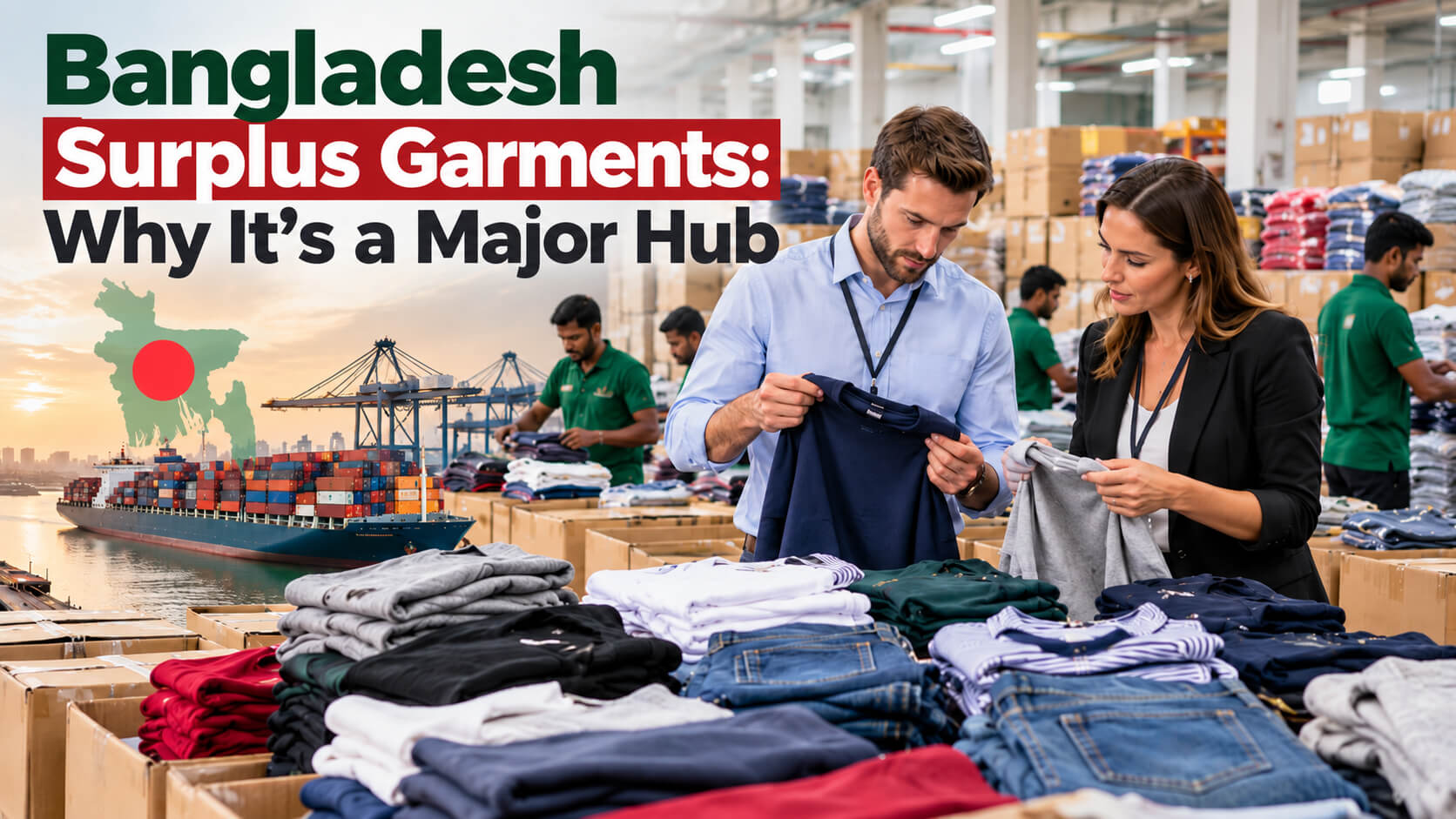
Why Bangladesh Is a Major Hub for Surplus Garments 07 October, 2026

Why Bangladesh Is a Major Hub for Surplus Garments

For apparel wholesalers and importers, buying surplus clothing can offer access to ready made inventory without the lead times associated with producing a new order. The challenge is finding a sourcing market with sufficient volume, product variety, competitive pricing, and an established export ecosystem. That is why Bangladesh surplus garments attract buyers from international wholesale, retail, and distribution markets. Bangladesh has one of the world's largest export oriented ready made garment industries. BGMEA data shows that the country exported approximately US$39.35 billion in ready made garments during fiscal year 2024 - 25. Such production scale naturally creates opportunities for legitimate excess inventory, order overruns, cancelled orders, samples, and other stock lot merchandise. This guide explains why Bangladesh has become an important source of garment stock lots, where surplus inventory comes from, what buyers should check, and how to source it more safely. Direct Answer: Why Is Bangladesh a Major Source of Surplus Garments? Bangladesh is a major source of surplus garments because its enormous export oriented apparel manufacturing sector handles high volume international orders. Production overruns, cancelled orders, excess quantities, samples, specification changes, and unsold export inventory can create stock lots that are subsequently sold through authorized channels to wholesalers and other buyers. What Are Surplus Garments? Surplus garments are finished or near finished clothing items remaining outside the quantity ultimately required for an original production order. Depending on the circumstances, surplus inventory can include: legitimate production overruns excess quantities manufactured to cover potential defects cancelled or reduced orders Buyer rejected goods that remain commercially usable showroom or approval samples Previous season merchandise excess inventory held by manufacturers or authorized traders. The terms surplus garments, stock lot garments, export surplus, and garment stock lot are often used interchangeably in wholesale markets. However, they do not automatically mean the same thing. A buyer should always establish exactly why the goods are available and whether the seller has the right to sell them. Why Does Bangladesh Produce So Many Surplus Garments? 1. Bangladesh Has a Large Export Oriented Apparel Industry The simplest explanation is manufacturing scale. Bangladesh produces apparel for international markets across categories including knitwear, woven garments, denim, sweaters, T-shirts, trousers, shirts, jackets, children's clothing, and other products. BGMEA reports ready made garment exports of about US$39.35 billion for fiscal year 2024–25, illustrating the volume moving through the country's apparel production system. At this scale, even a relatively small excess percentage across thousands of individual production runs can create significant volumes of available stock. This is one reason buyers searching for surplus garments in Bangladesh can encounter everything from several cartons of one style to much larger quantities of mixed apparel. 2. Factories Often Need Production Buffers Garment production rarely works by cutting and sewing exactly the ordered number of pieces. Suppose a buyer orders 100,000 T-shirts. A factory may need additional material and production capacity to compensate for issues such as: cutting defects sewing defects fabric faults shade variation damaged pieces inspection failures Size ratio adjustments. The exact production practice varies by factory, buyer agreement, product, and quality requirement. If the final shipment is completed successfully and permitted excess units remain, some of those garments may eventually enter the surplus market. This does not mean every factory overrun can legally be resold. Buyer agreements, intellectual property rights, labeling requirements, and disposal instructions may restrict what happens to excess units. 3. Order Cancellations and Quantity Changes Create Stock Lots Global apparel orders can change after production has already started. A retailer might reduce an order because of weaker demand, changes in seasonal plans, inventory pressure, delivery delays, financial problems, or other commercial reasons. If goods have already been cut, sewn, finished, or packed, the manufacturer may be left holding inventory. When contractual and legal conditions allow it, these garments can become Bangladesh stock lot garments available to other buyers. For wholesalers, such lots can be attractive because the goods already exist. They may therefore be available considerably faster than a newly manufactured order. 4. Bangladesh Produces a Wide Range of Apparel Another reason Bangladesh works well for stock lot sourcing is product diversity. A buyer may find surplus inventory in categories such as: Garment category Common sourcing opportunity T-shirts and polosLarge-volume basic stock Hoodies and sweatshirtsSeasonal and casualwear lots DenimJeans, shorts and jackets ShirtsMen's and women's woven styles TrousersCasual and formal bottoms KidswearMixed styles and size ranges SweatersSeasonal knit products JacketsOuterwear and lightweight jackets Actual availability changes constantly. Unlike regular production, stock lots cannot usually be reordered in identical specifications after the available quantity is sold. Why Do International Buyers Source Bangladesh Surplus Garments? Competitive Buying Opportunities Stock lot merchandise is normally being cleared rather than manufactured against a fresh purchase order. As a result, buyers may obtain commercially attractive prices compared with commissioning an equivalent new production run. However, buyers should compare more than unit cost. The relevant calculation is closer to: Purchase price + inspection + sorting + inland transport + freight + duties + losses from defective or unsuitable pieces. A cheap lot can become expensive if a high percentage is damaged, incorrectly sized, commercially restricted, or unsuitable for the destination market. Immediate or Shorter Availability Regular apparel production can involve fabric sourcing, lab dips, samples, approvals, cutting, sewing, finishing, inspection, and shipment. A finished garment stock lot in Bangladesh has already completed most or all of those steps. For buyers supplying discount stores, online sellers, market traders, regional wholesalers, or off price retail channels, shorter sourcing cycles can be a significant advantage. Flexible Quantities Some stock lots are large, while others contain comparatively modest quantities. This can make surplus sourcing useful for buyers who cannot commit to the minimum order quantities required for custom garment production. The trade off is limited consistency: buyers generally need to accept the colors, specifications, sizes, and quantities that physically exist. Surplus Garments vs. Regular Production: What Is the Difference? Factor Surplus/stock lot Regular production AvailabilityExisting inventoryMade after ordering Lead timeUsually shorterUsually longer CustomizationVery limitedHigh Colors and sizesBased on available stockBuyer-selected QuantityFixed by available lotNegotiated production quantity Repeat ordersOften impossibleUsually possible PricingCan be highly competitiveBased on specification and MOQ InspectionEssential before purchaseControlled during production Branding issuesRequire careful verificationEstablished in buyer contract Neither model is automatically better. Wholesale surplus garments from Bangladesh make sense when price, fast availability, and flexibility matter more than exact specifications or repeatability. Regular production is usually better when a buyer needs consistent designs, controlled sizing, private labeling, and ongoing replenishment. How Does the Bangladesh Stock Lot Supply Chain Work? A typical transaction can be understood in five steps. Step 1: Stock Becomes Available Inventory may originate from excess production, a cancelled order, surplus quantities, samples, or another legitimate source. Step 2: The Lot Is Documented A reliable seller should be able to provide basic information such as: item description quantity size breakdown colors fabric composition where known packing details condition photographs or videos origin and authorization information where relevant. Step 3: The Buyer Reviews the Goods Serious buyers should request samples or arrange physical inspection rather than purchasing solely from photographs. Step 4: Commercial Terms Are Confirmed Both sides agree on quantity, grading, price, packing, payment terms, inspection conditions, shipment terms, and documentation. Step 5: Goods Are Inspected and Shipped The buyer or an appointed third party inspector verifies the merchandise before release or shipment. For new supplier relationships, inspection before final payment or shipment can significantly reduce sourcing risk. Practical Example: Evaluating a Stock Lot Imagine an importer is offered 20,000 cotton T-shirts at an attractive wholesale price. Instead of immediately comparing the offer with factory production prices, the buyer should ask: Why is the stock available? Is the quantity physically in the warehouse? Are all 20,000 pieces the same quality grade? What is the size ratio? How many colors and styles are included? Are any garments defective? Do the products carry brand names or trademarks? Does the supplier have authority to sell them? Can an independent inspection be arranged? What documentation will accompany the shipment? A slightly more expensive lot with documented origin, stable sizing, low defect rates, and clear resale rights may deliver a better commercial result than the cheapest quotation. How Should You Choose a Stock Lot Garments Supplier in Bangladesh? Choosing a stock lot garments supplier Bangladesh buyers can rely on requires more than reviewing product photos. Verify the Business Confirm the legal identity, physical location, export capability, and commercial history of the company. Where appropriate, request relevant company registration and export documentation. Ask for Real Time Stock Evidence Stock lot markets move quickly. Images can be outdated or reused. Ask for current warehouse videos, packing list information, identifiable lot details, or a live video inspection where practical. Inspect Before Shipping Check a representative sample for: measurements sewing quality stains holes color differences print defects broken zippers or buttons incorrect labels packing condition size assortment. Confirm the Grade The word "surplus" does not automatically mean first quality merchandise. Ask whether goods are: first quality Minor defect seconds rejected merchandise mixed grade The condition should be recorded in the purchase agreement. Verify Brand and Trademark Rights This is particularly important for branded surplus garments Bangladesh sellers may offer. A brand label inside a garment does not by itself prove that the product can legally be resold or exported. Buyers should establish the merchandise's origin and the seller's authority to dispose of it. Trademark, parallel import, customs, distribution, and labeling rules can differ by destination country. Obtain appropriate legal or customs advice for branded goods when necessary. What Common Mistakes Should Stock Lot Buyers Avoid? The most frequent mistakes are related to verification rather than price. Buying from photographs alone Images may not reveal defects, inconsistent sizing, mixed grades, or actual available quantity. Focusing only on price per piece Freight, customs charges, inspection fees, unusable inventory, and sorting costs affect the real landed cost. Ignoring size ratios A 10,000 piece lot may appear attractive until the buyer discovers that commercially difficult sizes represent a large percentage. Assuming "export quality" is a formal quality grade Ask for measurable specifications instead of relying on broad marketing terminology. Failing to verify branded merchandise Unauthorized branded stock can create intellectual property and customs problems. Expecting repeat availability Stock lots are opportunistic. Once a lot sells, the same garment may never become available again. Skipping pre shipment inspection The cost of inspection can be far smaller than the cost of receiving a container of unsuitable merchandise. Expert Best Practices for Bangladesh Apparel Sourcing For buyers evaluating surplus clothing suppliers Bangladesh, use a repeatable sourcing process rather than treating every transaction as an isolated bargain. Use a Stock Lot Buying Checklist Before confirming an order, document: supplier identity exact available quantity garment category size ratio color ratio quality grade fabric composition defect allowance branding status unit price Incoterm inspection terms payment terms packing method shipping documents. Build Relationships With Reliable Suppliers Because availability changes rapidly, established sourcing relationships matter. A trusted sourcing company or supplier can alert buyers when suitable stock becomes available instead of requiring the buyer to search from zero for every order. Match Stock Lots to the Right Sales Channel Surplus garments work particularly well for business models that can handle changing assortments. Examples include: Off price retailers wholesalers discount chains online clearance sellers outlet stores regional distributors independent retailers They are less suitable for retailers that require identical replenishment of the same SKU throughout the year. Is Bangladesh a Reliable Country for Apparel Sourcing? Bangladesh has a mature export oriented apparel ecosystem serving international buyers, but supplier level due diligence remains essential. Better Work Bangladesh, an ILO and IFC initiative reports that its program currently works with hundreds of participating factories and dozens of international brands and retailers. Its work covers factory assessment, advisory services, worker conditions, compliance, and competitiveness. That broader ecosystem is relevant to Bangladesh apparel sourcing, but buyers should not assume that every manufacturer, trader, or stock lot supplier operates to the same standard. A country's manufacturing reputation does not replace individual supplier verification. Key Takeaway Bangladesh offers scale, product diversity, export experience, and substantial apparel manufacturing capacity. The strongest sourcing results come when buyers combine those advantages with inspection, documentation, supplier due diligence, and realistic expectations about stock lot availability. Frequently Asked Questions Why are surplus garments available in Bangladesh? Surplus garments are available because Bangladesh produces apparel at a very large scale for export markets. Excess production, order reductions, cancellations, samples, quality sorting, and leftover quantities can create stock lots. The reason varies from lot to lot, so buyers should confirm the origin and resale status before purchasing. Are Bangladesh stock lot garments cheaper than new production? They can be cheaper, but not every stock lot is automatically a bargain. Sellers may price existing inventory competitively because it needs to be cleared. Buyers should calculate total landed cost, including inspection, freight, duties, sorting, and defective pieces, rather than comparing only the quoted price per garment. Can I buy branded surplus garments from Bangladesh? Potentially, but branded merchandise requires additional verification. Buyers should confirm authenticity, ownership, the seller's right to dispose of the goods, and applicable trademark or customs restrictions in the destination market. A recognizable label does not by itself establish that a stock lot is authorized for resale. What is the minimum order quantity for surplus garments in Bangladesh? There is no universal minimum order quantity for stock lots. MOQ depends on the seller, product, available inventory, packing arrangement, and whether the supplier is willing to split a lot. Some lots may contain a few thousand pieces, while others can involve substantially larger quantities. How can I find reliable surplus clothing suppliers in Bangladesh? Start by verifying the supplier's legal business details, physical presence, stock ownership, export experience, and references. Request current stock evidence and detailed packing information, then arrange samples or a third party inspection. Avoid relying only on social media photographs, unusually low prices, or verbal assurances. What should I inspect before buying a garment stock lot? Check quality, measurements, quantity, size ratio, colors, fabric, workmanship, labeling, defects, and packing. For mixed lots, determine whether every carton contains the same quality grade. For branded products, also verify authenticity and resale authorization before arranging international shipment. Can export surplus garments from Bangladesh be reordered? Usually not in exactly the same form. Stock lots are based on existing inventory, so once the merchandise is sold, identical styles, colors, and size ratios may no longer be available. Buyers requiring continuous replenishment should consider regular production rather than relying exclusively on surplus inventory. Is stock lot sourcing suitable for every apparel business? No. It works best for wholesalers, discount retailers, outlet businesses, and distributors able to sell changing assortments. Businesses requiring private labels, exact specifications, predictable size ratios, seasonal consistency, or repeat SKUs are generally better served by planned garment production. Conclusion Bangladesh's position as a large export oriented apparel manufacturing base makes it a logical market for garment stock lots. High production volumes, changing buyer requirements, cancelled orders, samples, and legitimate excess quantities can all contribute to the supply of Bangladesh surplus garments. For international buyers, the opportunity is not simply "cheap clothing." The real advantage is access to existing apparel inventory that may combine competitive pricing with shorter availability and flexible quantities. Those benefits come with specific risks. Stock cannot always be repeated, quality can vary, size ratios may be uneven, and branded products require careful verification. The most effective approach is therefore straightforward: verify the supplier, understand why the goods are available, inspect the actual merchandise, document quality and quantity, confirm resale rights where relevant, and calculate the complete landed cost before purchasing. For wholesalers and distributors able to work with opportunistic inventory, Bangladesh can be a valuable part of a diversified apparel sourcing strategy. Ready to source surplus garments from Bangladesh? Contact Spider Textile today. Get a Quote
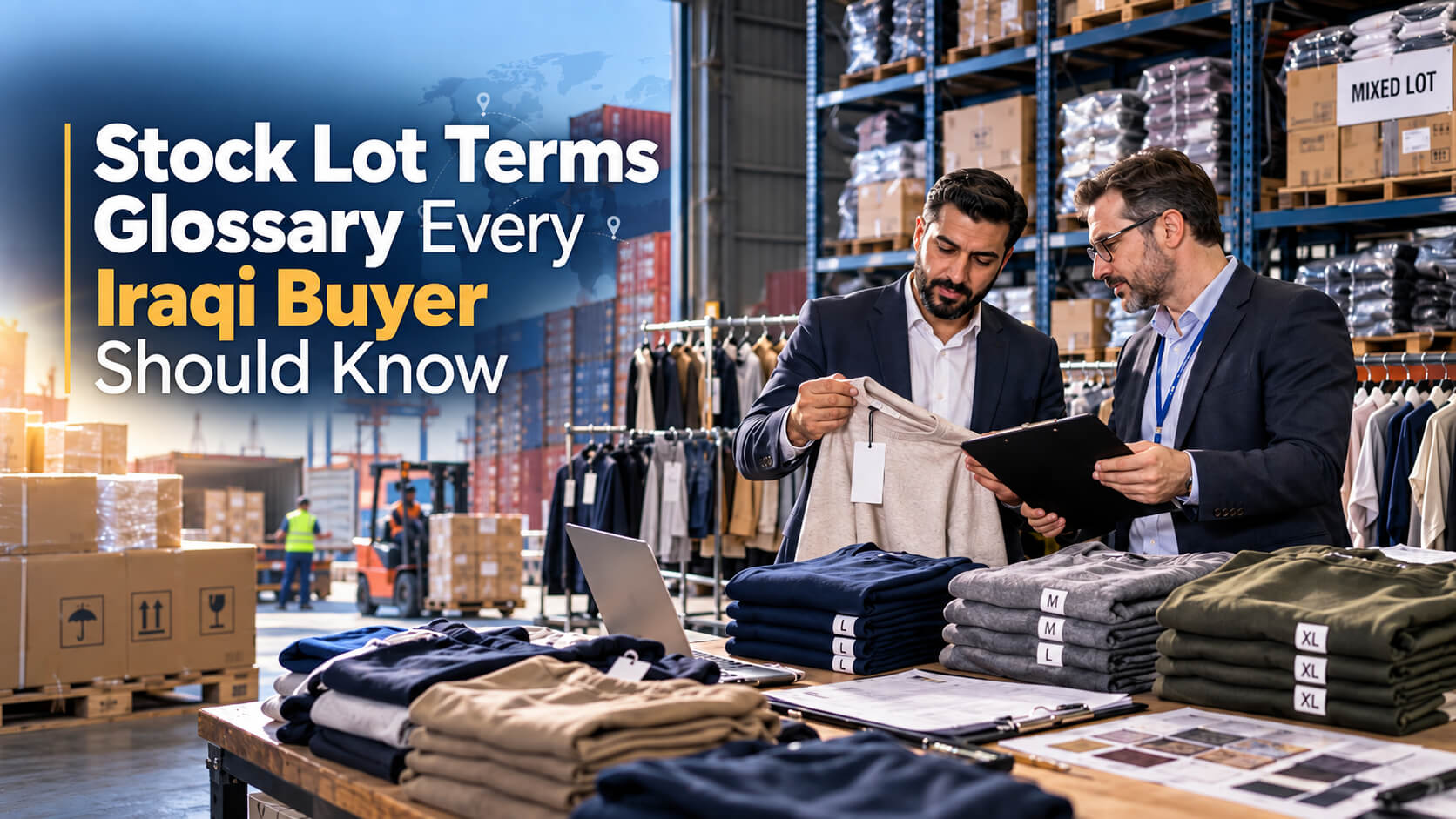
Stock Lot Terms Glossary Every Iraqi Buyer Should Know 30 September, 2026

Stock Lot Terms Glossary Every Iraqi Buyer Should Know

Buying garment stock lots from international suppliers can create profitable opportunities for Iraqi wholesalers, retailers, and distributors. However, many new buyers face difficulties because suppliers use specialized terms related to inventory condition, quantities, pricing, and shipping. Understanding a stock lot terms glossary helps Iraqi buyers communicate clearly with exporters, compare supplier offers, and reduce the risk of purchasing unsuitable inventory. Whether you source clothing from Turkey, China, Europe, UAE, or other markets, knowing common wholesale stock lot terms is an important part of successful importing. This guide explains the most important stock lot terminology, including surplus stock terms, garment descriptions, export terms, and practical buying advice for Iraqi wholesale businesses. Direct Answer: Stock lot terms are industry expressions used to describe bulk clothing inventory, including surplus goods, leftover production, cancelled orders, excess stock, and clearance items. Iraqi buyers should understand terms such as surplus stock, MOQ, mixed lots, graded garments, original packing, and FOB pricing before purchasing from international suppliers. What Are Stock Lot Terms? Stock lot terms are words and phrases used by garment manufacturers, exporters, wholesalers, and traders to describe bulk inventory available for sale. Unlike regular retail purchasing, stock lot buying involves large quantities of ready-made products sold at discounted prices. Wholesale transactions typically involve buying goods in bulk for resale rather than individual consumer purchases. For Iraqi buyers, understanding these terms is essential because a supplier's description can affect: Product quality expectations Final buying cost Shipping decisions Customer satisfaction Profit margins A buyer who understands the terminology can ask better questions and make more informed purchasing decisions. Stock Lot Meaning: What Does Stock Lot Mean? A stock lot refers to a quantity of garments or products available for bulk sale because they are excess inventory, leftover goods, cancelled orders, factory surplus, or discontinued items. A stock lot may include: Unsold seasonal clothing Extra production quantities Export surplus Brand overstock Factory leftovers Customer cancelled orders For example: A garment factory produces 50,000 jackets for an overseas customer. The buyer only accepts 45,000 pieces, leaving 5,000 finished jackets available as a stock lot. The quality may still be excellent, but buyers must verify the reason the stock became available. Stock Lot Glossary: Important Terms Iraqi Buyers Should Know Surplus Stock Meaning: Extra inventory remaining after fulfilling an original production order. Example: A supplier produces 100,000 shirts but has 10,000 extra pieces. Those additional shirts may be sold as surplus stock. Buyer consideration: Always ask whether surplus stock is: Factory surplus Retail surplus Brand surplus Mixed surplus The source can affect quality and pricing. Overstocks Meaning: Products produced or purchased in higher quantities than market demand requires. Overstock garments are usually: New Unused Available immediately Sold below original wholesale prices Overstocks can be attractive for Iraqi retailers because they often provide good value, but buyers should check styles, sizes, and market demand. Cancelled Order Stock Meaning: Garments manufactured for a customer who later cancelled or reduced the order. Important questions to ask: Was the order cancelled before shipment? Are labels and packaging complete? Are quantities and sizes balanced? Cancelled orders can offer competitive prices but require careful verification. Export Surplus Meaning: Extra garments produced for export markets but not shipped to the original buyer. Export surplus may include: International quality products Export-standard packaging Brand-approved manufacturing However, buyers should confirm whether branding, labels, and documentation are suitable for import into Iraq. Mixed Lot Meaning: A stock lot containing different styles, colors, sizes, or designs. Example: A mixed women's clothing lot may include: 30% dresses 40% tops 30% trousers Mixed lots are usually cheaper but may require stronger market knowledge. Grade A, Grade B, and Grade C Clothing These terms describe product conditions. Grade Meaning Buyer Consideration Grade A Best condition, usually new or near-new Suitable for regular retail Grade B Minor issues such as packaging problems or small defects Requires inspection Grade C Visible defects or lower quality Usually suitable for discount markets Important: Grade definitions are not always standardized. Iraqi buyers should request photos, videos, or inspection reports. Original Packing (OP) Meaning: Products remain in the manufacturer's original packaging. Benefits: Easier inventory management Better presentation Lower handling risk Ask suppliers whether products are: Original packed Repacked Bulk packed Assorted Lot Meaning: A collection of different products sold together. Assorted lots may contain: Multiple designs Different colors Different sizes This can work well for wholesalers serving customers who prefer variety. MOQ (Minimum Order Quantity) Meaning: The smallest quantity a supplier accepts for an order. Example: MOQ: 500 pieces. This means the buyer must purchase at least 500 units. Understanding MOQ is important because it affects: Investment size Shipping costs Storage requirements FOB (Free on Board) Meaning: A common export pricing term where the seller is responsible until goods are loaded at the shipping point. FOB pricing usually excludes: International freight Insurance Import duties Iraqi buyers should confirm exactly what costs are included before comparing supplier prices. Wholesale Stock Lot Terms Comparison Table Term Simple Meaning Why Buyers Need to Know Stock lot Bulk available inventory Defines the type of purchase Surplus stock Extra production May offer lower prices Overstock Unsold inventory Often new products Mixed lot Variety of items Requires market knowledge MOQ Minimum order quantity Determines order size FOB Export pricing method Helps calculate total cost Grade A Better condition Lower quality risk Clearance stock Discounted old inventory Suitable for price-focused markets Garments Stock Lot Terminology Explained Garment exporters commonly use additional clothing-specific terms. Style A garment design or product model. Example: Style 101: Men's cotton shirt Style 202: Women's jacket Size Ratio The distribution of sizes in a shipment. Example: A shirt shipment may contain: 20% Small 40% Medium 30% Large 10% XL A good size ratio helps retailers match customer demand. Color Ratio The percentage of each color included in a lot. Example: Black 40% White 30% Blue 30% Season Stock Garments associated with a specific fashion season. Examples: Winter jackets Summer dresses Seasonal stock may be cheaper after demand decreases. Dead Stock Meaning: Inventory that has remained unsold for a long period. Dead stock can provide low prices, but buyers should evaluate whether customers will purchase those styles. Export Import Terms Iraq Buyers Should Understand International garment purchasing involves more than product selection. Buyers should understand basic trade terminology. Invoice A commercial document showing: Product details Quantity Price Seller information Packing List A document showing: Number of cartons Weight Product breakdown HS Code A product classification code used in international trade. It helps customs authorities identify imported goods. Lead Time The time between placing an order and receiving goods. Factors affecting lead time include: Production Inspection Shipping Customs clearance How Iraqi Buyers Can Evaluate a Stock Lot Before Purchasing Follow this process: Step 1: Understand the Product Source Ask: Why is this stock available? Is it surplus, cancelled order, or clearance? Who manufactured it? Step 2: Request Product Evidence Before payment, request: Real photos Videos Size breakdown Packaging details Quality information Step 3: Calculate Total Cost Do not compare only the garment price. Consider: Product cost Shipping Customs fees Local transportation Storage costs Step 4: Confirm Market Demand A low price does not guarantee profit. Consider: Customer preferences Local climate Fashion trends Retail pricing Practical Examples Example 1: Buying Men's Shirts A supplier offers: "10,000 pieces export surplus men's shirts, Grade A, mixed colors, FOB Turkey." Meaning: 10,000 units available Originally made for export Good condition Different colors included Price applies before shipping The buyer should ask about: Size ratio Brand labels Fabric quality Packaging Example 2: Buying Children's Clothing A supplier offers: "Assorted kidswear stock lot." The buyer should clarify: Age ranges Seasonal suitability Defect percentage Quantity per design Common Mistakes Iraqi Buyers Should Avoid Buying Only Based on Price Cheap inventory may have poor size distribution, old designs, or quality issues. Not Checking Product Photos Descriptions alone are not enough. Always request current images or videos. Ignoring Import Requirements Buyers should verify customs requirements, documentation, and label regulations. Requirements may change and should be confirmed with relevant Iraqi authorities. Ordering Too Much Without Testing New buyers should consider starting with manageable quantities before making larger purchases. Expert Tips for Successful Stock Lot Buying Build Supplier Relationships Reliable suppliers provide accurate descriptions, better communication, and consistent quality. Learn Your Market Track fast-selling categories, popular sizes, and customer preferences. Request Detailed Stock Lists A professional supplier should provide product names, quantities, sizes, colors, and conditions. Inspect When Possible For large orders, consider third-party inspection services before shipment. Frequently Asked Questions (FAQs) What is the meaning of stock lot in garments? A stock lot in garments means a bulk quantity of clothing available for sale, usually from surplus production, cancelled orders, excess inventory, or clearance stock. These products are often sold at discounted prices to wholesalers and importers. Are stock lot clothes good quality? Stock lot clothing quality depends on the source and condition. Some lots contain export-quality garments, while others may include mixed grades or defective items. Buyers should confirm quality through photos, samples, inspection, or supplier documentation. What stock lot terms should Iraqi buyers know? Important terms include surplus stock, export surplus, mixed lot, MOQ, Grade A, original packing, FOB, size ratio, color ratio, and dead stock. Understanding these terms helps buyers evaluate supplier offers correctly. Is buying stock lots profitable in Iraq? Stock lot buying can be profitable when buyers select products that match local demand and calculate all costs before purchasing. Profitability depends on product selection, quality, pricing, and market conditions. What is the difference between surplus stock and dead stock? Surplus stock is usually extra inventory from production or orders. Dead stock refers to products that have remained unsold for a long time. Surplus stock may still have strong market demand, while dead stock may require discount selling. How can I verify a stock lot supplier? Buyers can verify suppliers by checking business history, requesting product evidence, reviewing documentation, communicating clearly, and using inspection services for larger transactions. Conclusion Understanding stock lot terminology gives Iraqi wholesale buyers a stronger position when sourcing garments internationally. Terms such as surplus stock, export surplus, mixed lots, MOQ, and FOB are not just industry vocabulary; they directly affect purchasing decisions, costs, and business outcomes. A successful stock lot purchase requires more than finding a low price. Buyers should evaluate product condition, supplier reliability, market demand, and total import costs before placing orders. By using this stock lot terms glossary as a reference, Iraqi importers and retailers can communicate more effectively with suppliers and make better-informed buying decisions. Ready to source stock lot garments? Contact Spider Textile today. Get a Quote
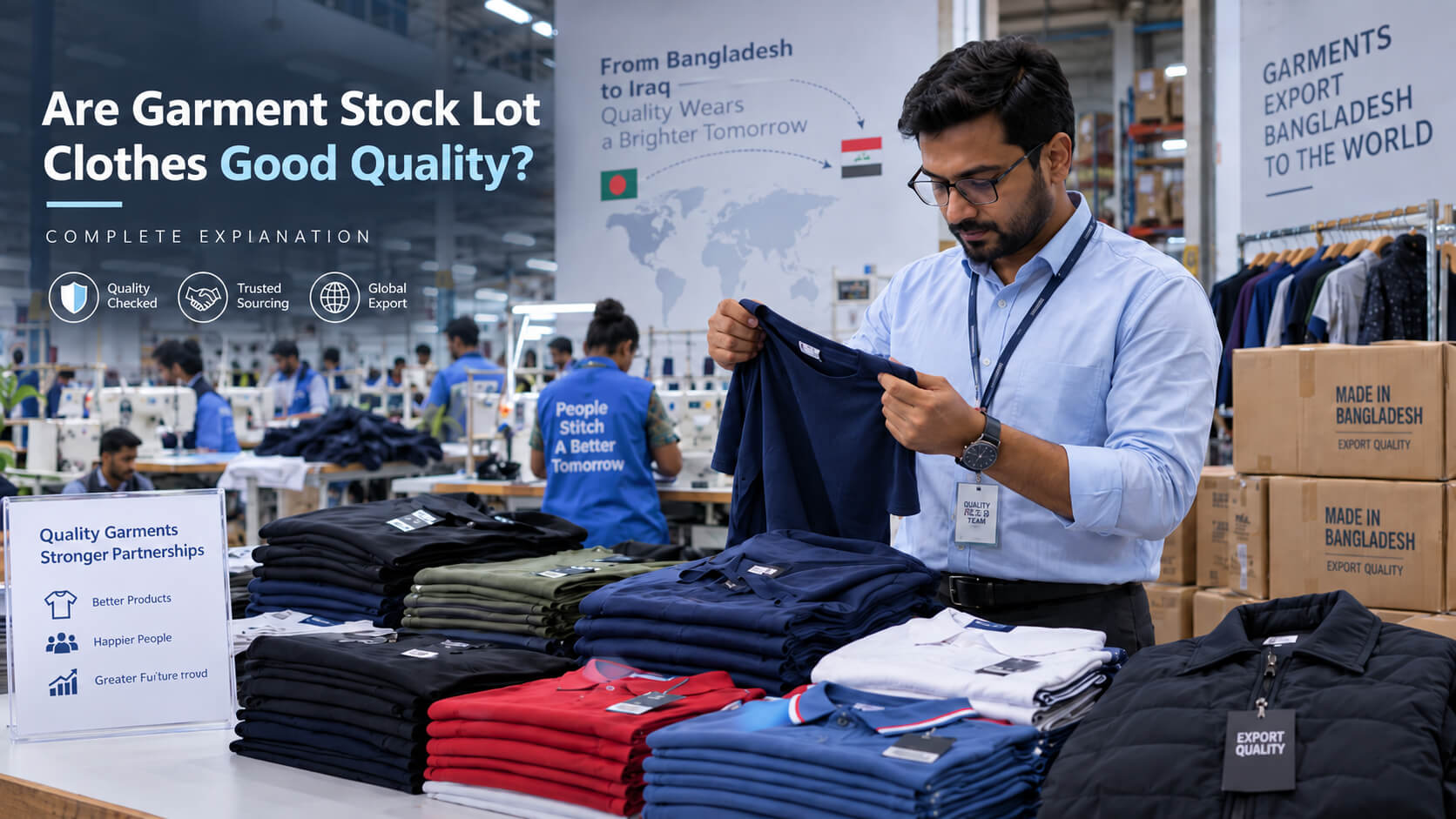
Are Garment Stock Lot Clothes Good Quality? Complete Explanation 23 September, 2026

Are Garment Stock Lot Clothes Good Quality? Complete Explanation

Yes, garment stock lot clothes can be very good quality if they are sourced from reliable factories and inspected properly before shipment. Many stock lot garments come from the same export factories that manufacture clothing for international markets. However, quality can vary depending on the reason for the stock clearance, supplier reputation, and quality checking process. For Iraqi clothing wholesalers, retailers, and fashion businesses in cities like Baghdad, Erbil, Sulaymaniyah, Basra, Mosul, Kirkuk, and Duhok, buying stock lot garments from a trusted Bangladesh garment sourcing company can be a profitable opportunity. The key is understanding how to identify genuine export-quality stock and avoid poor-quality products. Bangladesh is one of the world's leading garment sourcing destinations, supplying international fashion brands and global retailers. Its ready-made garment industry has become a major export sector, with millions of workers and thousands of factories involved in clothing production. In this guide, we explain everything Iraqi buyers need to know about garment stock lot quality, pricing, inspection, sourcing methods, and how professional sourcing support can reduce buying risks. What Are Garment Stock Lot Clothes? Garment stock lot clothes are finished garments that remain available after the original production order is completed. These products are usually sold at lower prices because factories, exporters, or brands want to clear inventory. Stock lot garments can come from several sources: Excess production after completing an export order Cancelled buyer orders Extra pieces produced for quality assurance Seasonal inventory clearance Brand or retailer overstock Slightly imperfect items For example, a factory in Bangladesh may produce 100,000 T-shirts for an international buyer but deliver only 95,000 pieces. The remaining 5,000 pieces may become stock lot garments. Are Garment Stock Lot Clothes Good Quality? Complete Explanation The simple answer is: Yes, many garment stock lot clothes are high quality, but buyers must verify the source before purchasing. The quality depends mainly on: The factory that produced the garments The original buyer requirements The reason the products became stock The inspection process before shipment A common mistake among Iraqi buyers is assuming all stock lot clothing is low quality. This is not true. Many export surplus garments are manufactured according to strict international standards. Bangladesh produces garments for many global markets, which means many factories already follow professional production and quality systems. Why Are Stock Lot Clothes Often High Quality? They Often Come From Export-Level Factories Many garment stock lots are produced by factories that manufacture: T-shirts Polo shirts Jeans Jackets Hoodies Sweaters Children's clothing for international buyers. These factories usually use: Quality fabrics Modern machinery Professional stitching methods Standard measurement systems A stock lot does not automatically mean a defective product. They Can Be Made With Premium Materials Some stock lot garments contain: 100% cotton fabric Organic cotton High-quality polyester blends Premium denim Export-grade materials The fabric quality can sometimes be better than regular wholesale clothing because the original order may have been designed for international customers. When Can Garment Stock Lot Clothes Have Poor Quality? Although many stock lots are excellent, some products may have problems. Buyers should be careful about: Mixed Grade Stock Lots Some suppliers mix: Grade A products Grade B products Defective pieces inside one shipment. Always confirm: Defect percentage Quality grade Product photos Sample approval before ordering. Incorrect Size Ratio One common problem for Iraqi clothing sellers is receiving unsuitable sizes. For example: A supplier may provide: Too many small sizes Too few popular sizes European sizing instead of Iraqi customer preferences Before buying, confirm the complete size breakdown. Old Fashion Inventory Some stock lots are leftover seasonal products. For example: Winter jackets may sell slower during hot seasons in Basra or Baghdad. Professional sourcing advice is important to select products suitable for local customer demand. How Iraqi Buyers Can Check Garment Stock Lot Quality Before Buying Before importing stock lot garments from Bangladesh, follow these steps: 1. Request Product Samples Never place a large order without checking samples. Inspect: Fabric quality Color Stitching Labels Packaging Size accuracy 2. Verify the Supplier Background Ask: Where was the product manufactured? Which factory produced it? Was it an export order? Why is it available as stock? A reliable sourcing partner should provide clear answers. 3. Perform Quality Inspection A professional inspection should check: Random product quantity Sewing quality Fabric defects Measurement accuracy Packing condition This step helps Iraqi importers avoid expensive mistakes. Why Iraqi Businesses Buy Garment Stock Lots From Bangladesh Bangladesh has become a preferred sourcing destination because of its strong garment manufacturing ecosystem. The country is among the largest apparel exporters globally and supplies many international clothing markets. For Iraqi businesses, stock lot garments offer several advantages. Lower Purchase Cost Stock lot clothing is usually cheaper than producing a new custom order. This helps: Small retailers Wholesale traders Online clothing sellers start with lower investment. Better Profit Opportunities When purchased correctly, stock lots can provide: Competitive retail prices Better profit margins More product variety Faster Availability Unlike custom manufacturing, stock lots are already produced. Businesses can receive products faster compared with creating a new collection. Common Mistakes Iraqi Buyers Make When Buying Stock Lot Clothes Choosing Only the Cheapest Supplier The cheapest supplier is not always the best option. Low prices can sometimes indicate poor quality, mixed products, or hidden defects. Buying Without Inspection Many importers make the mistake of trusting pictures only. Professional buyers always check samples and quality reports. Not Understanding Customer Demand A product that sells well in another country may not perform well in Iraq. Consider climate, fashion trends, customer income level, and seasonal demand. Cost of Garment Stock Lot Clothes for Iraqi Buyers The price of stock lot garments depends on several factors. Product Type Examples: Basic T-shirts usually cost less Jackets and denim products cost more Quantity Large orders generally receive better pricing. Quality Level Export-grade Grade A stock will usually cost more than mixed-quality products. Shipping and Import Expenses Iraqi buyers should also consider: Transportation Customs charges Warehouse costs Inspection fees A professional sourcing company can help calculate the complete landed cost before purchase. Garment Stock Lot Buying Opportunities in Iraqi Cities Baghdad Baghdad has one of the largest clothing markets in Iraq. Retailers and wholesalers often look for: Affordable fashion products Bulk clothing supply Export-quality garments A reliable Bangladesh sourcing partner can help Baghdad businesses access verified stock lots. Erbil Erbil has strong demand for imported fashion products. Businesses in areas around Erbil can benefit from: Branded surplus clothing Premium stock lots Seasonal collections Sulaymaniyah Retailers in Sulaymaniyah often require: Affordable clothing options Quality winter wear Fashion products for different age groups Basra, Mosul, Kirkuk, Duhok, and Najaf Stock lot sourcing can support businesses across Iraq by providing: Competitive wholesale pricing Variety of clothing categories Reliable supply chains How to Maintain Garment Stock Lot Clothes After Purchase Proper storage helps maintain garment quality. Store Products in Dry Areas Avoid: Moisture Direct sunlight Dust exposure Use Proper Packaging Recommended: Clean cartons Protective covers Organized inventory systems Check Products Before Selling Before sending products to customers: Remove damaged pieces Check labels Arrange sizes properly Expert Advice: How Professional Sourcing Companies Reduce Risks A professional garment sourcing company works as a bridge between Iraqi buyers and Bangladesh factories. The process usually includes: Finding suitable suppliers Checking factory capability Negotiating prices Inspecting products Managing shipment For example, an Iraqi wholesaler from Baghdad ordering 10,000 pieces of polo shirts may not know whether the supplier is offering genuine export stock. A sourcing company can verify the factory, inspect samples, and confirm quality before shipment. Get Reliable Garment Stock Lot Clothes From Bangladesh If you are searching for high-quality garment stock lot clothes for Iraq, working with an experienced Bangladesh sourcing company can make the process easier and safer. Whether your business is located in Baghdad, Erbil, Sulaymaniyah, Basra, or other Iraqi cities, Spider Textile can help you find suitable stock lot clothing solutions. Visit our service page to learn more: Garment Sourcing Company Bangladesh Frequently Asked Question (FAQs) 1. Are garment stock lot clothes good quality for Iraqi buyers? Yes, garment stock lot clothes can be high quality when purchased from verified Bangladesh suppliers with proper inspection. 2. Where can Iraqi businesses buy garment stock lot clothes? Businesses in Baghdad, Erbil, Basra, Sulaymaniyah, and other Iraqi cities can source stock lot clothing through professional garment sourcing companies. 3. Are Bangladesh stock lot garments suitable for Iraq? Yes, Bangladesh stock lot garments can be suitable for Iraq when products are selected according to local climate, customer demand, and quality requirements. 4. How can I check garment stock lot quality before importing? You should check samples, verify suppliers, inspect fabric and stitching quality, and confirm product details before shipment. 5. Are stock lot clothes cheaper than normal wholesale garments? Yes, stock lot garments are usually cheaper because they come from excess production, cancelled orders, or clearance inventory. 6. Can a sourcing company help me buy garments from Bangladesh? Yes, a sourcing company can help with supplier verification, product inspection, price negotiation, and shipment management. 7. What is the safest way to buy garment stock lots for Iraq? The safest method is working with a verified sourcing partner who can inspect products before shipment and ensure supplier reliability. Ready to source garment stock lot clothes from Bangladesh? Contact Spider Textile today. Get a Quote
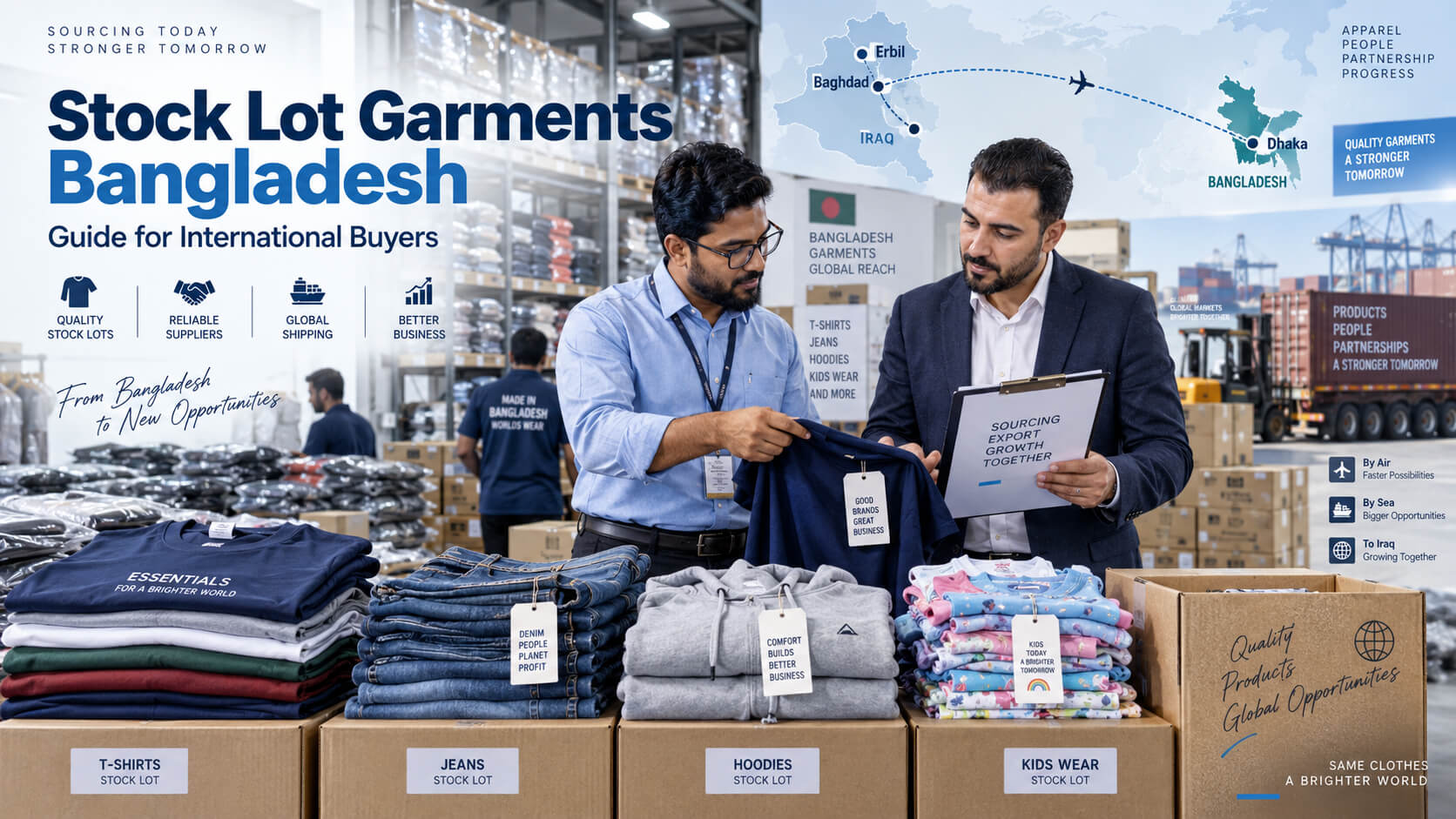
Stock Lot Garments Bangladesh Guide for Iraqi Buyers & Importers 16 September, 2026

Stock Lot Garments Bangladesh Guide for Iraqi Buyers & Importers

Stock lot garments from Bangladesh are surplus, cancelled-order, or excess inventory clothing items available at competitive wholesale prices. Iraqi buyers, wholesalers, and retailers often source these garments through trusted Bangladesh sourcing agencies to access affordable apparel with export-quality standards. For international buyers looking for stock lot garments Bangladesh suppliers, the biggest challenge is not finding products. The challenge is finding reliable suppliers, verifying quality, controlling costs, and ensuring smooth export from Bangladesh to Iraq. A professional buying house helps manage supplier selection, inspection, negotiation, documentation, and shipping coordination. Bangladesh is one of the world's largest garment manufacturing hubs, making it a preferred sourcing destination for businesses that want affordable clothing inventory. Iraqi importers from Baghdad, Erbil, Basra, Mosul, Najaf, and Sulaymaniyah regularly explore Bangladesh stock garments because they offer variety, competitive pricing, and opportunities for strong retail margins. What Are Stock Lot Garments Bangladesh Suppliers Offer? Definition of Stock Lot Garments Stock lot garments are finished clothing products available after regular production but not sold through their original order channels. These garments usually come from: Excess factory production Cancelled export orders Buyer rejection due to minor issues Seasonal leftover inventory Overstock products Brand surplus collections Unlike used clothing, stock lot garments are usually new and unused products. Many items are produced in the same factories that manufacture garments for international brands. For Iraqi buyers, this creates an opportunity to purchase quality clothing at lower prices compared with standard wholesale production. Why Iraqi Buyers Choose Stock Lot Garments from Bangladesh 1. Competitive Wholesale Prices One of the main reasons Iraqi clothing businesses search for Bangladesh stock lot clothing exporters is cost efficiency. Stock garments often provide: Lower purchase prices Faster availability No long production waiting period Flexible order quantities For example, a clothing retailer in Baghdad who needs affordable summer T-shirts may find stock lots more suitable than placing a new factory order with a high minimum quantity. 2. Strong Garment Manufacturing Experience Bangladesh has decades of experience producing: T-shirts Jeans Shirts Jackets Hoodies Sweaters Children's clothing Sportswear Many factories already follow international production standards, making Bangladesh attractive for global buyers. However, stock lot quality varies. A professional inspection process remains essential before shipment. 3. Wide Product Variety Iraqi wholesalers often need different categories for different seasons. Bangladesh stock suppliers offer: Summer clothing Winter collections Casual wear Fashion items Children's garments Men's and women's apparel A sourcing agency helps buyers find suitable products based on Iraqi market demand. Types of Stock Lot Garments Available from Bangladesh Popular Categories for Iraqi Importers T-Shirts and Polo Shirts Suitable for: Wholesale markets Retail shops Seasonal promotions Jeans and Denim Products Popular because Bangladesh has strong denim manufacturing capabilities. Hoodies and Sweatshirts Commonly purchased for winter markets in areas such as: Erbil Sulaymaniyah Northern Iraq regions Children's Clothing Often attractive because buyers need affordable family clothing options. Fashion and Casual Wear Includes: Tops Shirts Dresses Trend-based items How to Buy Stock Lot Garments from Bangladesh for Iraq Buying stock garments successfully requires a clear process. Step 1: Define Your Product Requirements Before contacting suppliers, Iraqi buyers should prepare: Product category Quantity required Target price Preferred sizes Color preferences Delivery location Example: A retailer in Basra looking for affordable summer clothing should specify: Cotton T-shirts Mixed sizes Wholesale quantity Export packing requirements Step 2: Find a Verified Bangladesh Stock Lot Supplier Many suppliers advertise online, but not all provide accurate information. Check: Company background Factory connections Previous export experience Product availability Customer references Working with a Bangladesh apparel sourcing agent for Iraq reduces risk because the buyer gets local market support. Step 3: Verify Stock Quality Before Payment Professional buyers never rely only on photos. Quality verification should include: Live product inspection Fabric checking Stitching review Size measurement Quantity confirmation Packing verification A common mistake among new buyers is paying before physically confirming the stock condition. Step 4: Arrange Export and Shipping After approval, the sourcing partner manages: Commercial documents Packing details Export coordination Freight arrangements Shipping options depend on: Order size Destination Budget Delivery timeline Stock Lot Garments Bangladesh Cost Guide for Iraqi Buyers The final cost depends on several factors. Main Cost Factors Product Price Influenced by: Garment type Quality grade Quantity Brand category Inspection Cost Professional inspection protects buyers from receiving unsuitable products. Packaging Cost Export packaging may include: Cartons Labels Sorting Documentation Shipping Cost Depends on: Shipment volume Destination port Freight rates Import Charges in Iraq Buyers should consider: Customs requirements Local import regulations Clearance expenses Example Cost Planning A simple buying calculation: Garment Purchase Price + Inspection Cost + Packing Cost + Shipping Cost + Import Expenses = Total Landed Cost Understanding the complete cost helps Iraqi wholesalers calculate accurate retail pricing. Common Problems Iraqi Buyers Face When Purchasing Stock Lot Garments Buying From Unverified Suppliers One of the biggest risks is dealing with unknown suppliers. Possible problems: Fake product images Incorrect quantities Poor-quality garments Missing items Professional advice: Always verify products before shipment. Receiving Mixed Quality Products Stock lots may contain different quality levels. For example: A supplier may describe a lot as "export quality," but some pieces may have: Minor stitching issues Different shades Packaging problems Inspection helps identify these issues early. Communication Problems International buyers often face: Slow responses Misunderstandings Incorrect product expectations A local Bangladesh sourcing partner acts as a communication bridge between Iraqi buyers and suppliers. Best Areas in Bangladesh for Stock Lot Garment Sourcing Dhaka Dhaka is the main commercial center for Bangladesh garment sourcing. Buyers can access: Buying houses Export suppliers Stock garment networks Gazipur Gazipur is one of Bangladesh's major garment manufacturing areas. Advantages: Factory connections Export surplus availability Large production facilities Narayanganj Known for textile and apparel-related businesses. It is another important sourcing location for garment buyers. Stock Lot Garments Bangladesh Supplier Support for Iraqi Cities Stock Lot Garments Supplier for Baghdad Buyers Baghdad has one of Iraq's largest wholesale and retail markets. Businesses in areas around Baghdad often need: Affordable clothing inventory Reliable suppliers Consistent product availability A Bangladesh sourcing partner helps Baghdad importers manage supplier communication and quality checking. Bangladesh Stock Lot Clothing Exporter for Erbil Buyers Erbil has strong commercial activity and growing retail demand. Buyers often look for: Winter clothing Fashion products Premium-looking garments at competitive prices A sourcing agency helps Erbil businesses find suitable Bangladesh stock collections. Wholesale Stock Garments from Bangladesh to Basra Basra businesses often require affordable clothing options suitable for large customer groups. Professional sourcing support helps with: Bulk purchasing Shipment planning Cost management Stock Garment Supply for Mosul, Najaf, and Sulaymaniyah Buyers from these regions also benefit from: Verified supplier networks Product inspection Export assistance Each market has different clothing preferences, so product selection should match local customer demand. Expert Checklist Before Buying Stock Lot Garments Bangladesh Before confirming an order, Iraqi buyers should check: Supplier verification Product photos and videos Stock availability Quality inspection report Quantity confirmation Size ratio Packing details Export documents Shipping terms Prevention Tips: How to Avoid Stock Lot Buying Risks Always Inspect Before Shipment Inspection reduces risks related to wrong products, damaged garments, and missing quantities. Avoid Extremely Cheap Offers Very low prices often require extra verification. A professional buyer compares product quality, supplier reputation, and complete cost. Clearly Define Quality Expectations Before purchasing, confirm grade level, acceptable defects, and packaging requirements. Clear communication prevents disputes. When to Call a Professional in Baghdad You Need a Bangladesh Sourcing Professional When: You are importing stock garments for the first time. You cannot visit Bangladesh personally. You need supplier verification. You require quality inspection. You need export support. You want better negotiation with suppliers. A professional sourcing agency saves time and reduces international buying risks. Why Choose Us for Stock Lot Garments Bangladesh Sourcing in Iraq At Spider Textile, we help Iraqi buyers connect with reliable Bangladesh garment suppliers through professional sourcing support. Our services include: Supplier research Stock verification Product inspection Price negotiation Export coordination Buyer communication support We understand that international buyers need more than product availability. They need transparency, reliability, and professional handling throughout the sourcing process. Whether you are a wholesaler in Baghdad, retailer in Erbil, or importer in Basra, our team helps simplify Bangladesh garment sourcing. Get Reliable Stock Lot Garments Bangladesh Sourcing Support Finding the right supplier is the first step toward successful garment importing. If you are looking for stock lot garments Bangladesh suppliers for Iraqi buyers, Spider Textile helps you source products, verify quality, and manage the buying process with confidence. Contact Spider Textile today to discuss your stock garment requirements and start your Bangladesh sourcing journey. Local FAQs: Stock Lot Garments Bangladesh for Iraqi Buyers 1. What are stock lot garments Bangladesh suppliers provide? Stock lot garments are new surplus or excess clothing products from Bangladesh factories sold at discounted wholesale prices. 2. Can Iraqi buyers import stock lot garments from Bangladesh? Yes, Iraqi wholesalers and retailers regularly source Bangladesh stock garments through suppliers and buying houses. 3. How do I find a reliable stock lot garments supplier for Iraq? Work with verified Bangladesh sourcing partners who provide supplier checks, inspections, and export support. 4. Are Bangladesh stock lot garments good quality? Quality depends on the supplier and stock source, so buyers should complete inspection before shipment. 5. What cities in Iraq buy stock lot garments from Bangladesh? Major markets include Baghdad, Erbil, Basra, Mosul, Najaf, and Sulaymaniyah. 6. How much do stock lot garments from Bangladesh cost? Prices depend on product type, quantity, quality level, shipping, and import expenses. 7. Why use a Bangladesh apparel sourcing agent for Iraq? A sourcing agent helps buyers verify suppliers, inspect products, negotiate prices, and manage export procedures. Ready to source stock lot garments from Bangladesh? Contact Spider Textile today. Get a Quote
Garment Supplier Coordination Guide for International Buyers 2026 09 September, 2026

Garment Supplier Coordination Guide for International Buyers 2026

Managing overseas production requires more than finding a factory with competitive pricing. International apparel buyers must coordinate specifications, timelines, quality expectations, and communication processes across different countries, languages, and business cultures. Effective garment supplier coordination helps brands avoid common problems such as incorrect samples, delayed approvals, fabric issues, missed shipping windows, and unexpected production changes. A structured supplier management system allows sourcing managers, fashion brands, and import businesses to maintain visibility from product development through final shipment. This guide explains how to build a reliable coordination process with clothing manufacturers, improve communication, manage production milestones, and reduce risks when manufacturing garments overseas. Direct Answer: Garment supplier coordination is the process of managing communication, production schedules, quality standards, and shipment requirements between apparel buyers and clothing manufacturers. International buyers can improve coordination by using clear product specifications, approved samples, production tracking systems, factory audits, and pre-shipment inspections before goods leave the factory. What Is Garment Supplier Coordination? Garment supplier coordination is the structured process of working with apparel manufacturers to ensure products are made according to approved specifications, delivered on schedule, and meet required quality standards. For international buyers, coordination typically involves: Sharing accurate product specifications Reviewing samples and approving revisions Managing fabric and trim sourcing Tracking production milestones Monitoring quality control checkpoints Confirming packaging and shipping requirements Maintaining regular communication with factories Unlike simple supplier communication, effective coordination creates a repeatable operational system. It ensures that everyone involved from designers and sourcing teams to factory managers and logistics providers understands their responsibilities. Why Is Garment Supplier Coordination Important for International Buyers? What problems does supplier coordination solve? Poor coordination can create expensive issues throughout the apparel supply chain. Common challenges include: Challenge Potential Impact Unclear product specificationsIncorrect garments or costly revisions Delayed sample approvalsMissed production schedules Fabric quality problemsRejected inventory and financial losses Poor factory communicationUnexpected production changes Lack of milestone trackingLate shipments Unauthorized subcontractingQuality and compliance risks International buyers often work with suppliers thousands of miles away. Small misunderstandings that might be corrected quickly with a local manufacturer can become major delays when production happens overseas. A strong coordination process creates accountability before problems become expensive. How to Coordinate with Overseas Garment Suppliers Step by Step 1. Create a Complete Product Specification Package The first step in successful apparel production management is ensuring the manufacturer has complete product information before production begins. A professional specification package should include: Product drawings or design references Fabric composition and weight requirements Color standards Size measurements Stitching details Label and packaging requirements Quality expectations Delivery deadlines One of the most important documents is a tech pack for clothing manufacturers. A tech pack acts as a technical blueprint for garment production. It reduces interpretation errors by clearly documenting every detail needed to manufacture the product. A complete tech pack usually includes: Flat sketches Measurement charts Material details Construction instructions Bill of materials (BOM) Artwork placement Revision history Practical Example: A buyer ordering cotton hoodies should not only specify "heavyweight cotton hoodie." The supplier needs details such as fabric weight, cotton blend percentage, hood construction, rib specifications, print placement, stitch requirements, and packaging instructions. The more precise the information, the fewer production corrections are needed later. 2. Establish Clear Clothing Manufacturer Communication Processes How should buyers communicate with garment factories? Effective clothing manufacturer communication requires consistency, documentation, and defined approval processes. Recommended practices: Use written communication for important decisions Avoid relying only on phone calls or messaging apps. Confirm important decisions through documented channels. Record: Approved samples Fabric changes Timeline adjustments Quality decisions Packaging updates Assign clear points of contact A typical communication structure may include: Buyer Team Factory Team Product developerMerchandising manager Quality managerQuality control supervisor Sourcing managerProduction manager Logistics coordinatorExport department Clear ownership prevents situations where everyone assumes someone else handled an issue. 3. Build a Production Timeline With Factory Milestones How can buyers prevent garment production delays? Managing garment production lead times requires tracking each production stage rather than waiting for the final delivery date. A typical garment production timeline includes: Product inquiry and quotation Sample development Sample review and approval Material sourcing Pre-production confirmation Cutting and sewing Quality inspection Packing Shipment preparation Create milestone checkpoints for: Sample completion date Fabric approval date Production start date Mid-production quality review Final inspection date Shipping date A production calendar helps buyers identify delays early when corrective action is still possible. 4. Use Quality Control Checks Throughout Production Why should quality checks happen before shipment? Waiting until products are finished creates limited options. Quality management should happen throughout the manufacturing process. Important checkpoints include: Pre-production inspection Verify: Approved fabric availability Correct trims Production instructions Factory readiness During-production inspection Check: Stitch quality Measurements Construction consistency Defect rates Pre-shipment inspection apparel buyers should consider A pre-shipment inspection apparel process verifies finished goods before they leave the factory. Common inspection points include: Product appearance Measurements Color consistency Packaging accuracy Label placement Quantity verification Pre-shipment inspection is especially valuable for large orders where correcting issues after shipment becomes expensive. 5. Conduct Factory Audits Before Long Term Partnerships What should buyers check during a garment factory audit? Before committing to a supplier relationship, buyers should evaluate factory capability, compliance, and reliability. A factory audit checklist garments buyers can use should include: Audit Area Key Questions Production capacityCan the factory handle required volumes? EquipmentDoes the facility have suitable machinery? Quality systemsAre inspection procedures documented? WorkforceAre staffing levels appropriate? ComplianceAre required standards followed? SubcontractingIs outside production disclosed? Factory audits do not guarantee perfect performance, but they help identify risks before placing major orders. 6. Manage Offshore Garment Sourcing Risks What risks should international buyers consider when sourcing overseas? Offshore garment sourcing offers access to specialized manufacturing capabilities and competitive production costs, but it requires careful risk management. Common risks include: Communication delays Currency fluctuations Changing material availability Shipping disruptions Quality inconsistencies Regulatory requirements Risk reduction strategies include: Maintaining backup suppliers Approving samples before bulk production Documenting specifications Scheduling inspections Building realistic production timelines The cheapest supplier is not always the lowest-cost option if delays, defects, or rework increase total expenses. Apparel Supply Chain Management Best Practices How can buyers improve supply chain visibility? Strong apparel supply chain management requires visibility from raw materials to finished products. Recommended practices: Maintain a supplier performance record Track: On-time delivery performance Quality results Communication responsiveness Production accuracy Problem resolution Use standardized approval systems Create documented procedures for: Sample approval Color approval Material approval Production release Forecast demand accurately Factories need reliable forecasts to plan: Fabric purchasing Labor allocation Production capacity Better forecasting improves supplier relationships and reduces delays. Practical Example: A Better Supplier Coordination Workflow A small U.S. fashion brand working with an overseas clothing manufacturer can use this workflow: Before production Send complete tech pack Confirm quotation and timeline Approve fabric samples Review prototype sample During production Confirm production start date Receive milestone updates Conduct quality checks Before shipment Complete final inspection Approve packing details Confirm shipping documentation This process creates a clear chain of responsibility and reduces unexpected problems. Common Mistakes International Apparel Buyers Make 1. Choosing suppliers only based on price Low manufacturing costs can become expensive if quality problems or delays occur. Evaluate production capability, communication quality, quality systems, and reliability. 2. Starting production without a detailed tech pack Factories cannot produce consistently from vague descriptions. A complete technical package reduces assumptions and prevents avoidable errors. 3. Approving samples too quickly A rushed approval process can result in bulk production problems. Review fit, fabric behavior, construction, color accuracy, and measurements. 4. Not confirming subcontracting policies Some factories outsource production without informing buyers. Include subcontracting requirements in supplier agreements and verify production locations when necessary. 5. Ignoring time zone differences International teams should establish response expectations, meeting schedules, emergency contacts, and communication channels. Expert Tips for Better Garment Supplier Coordination Create a supplier communication schedule Regular updates reduce uncertainty. Example: Weekly production reports, biweekly management reviews, immediate escalation for major issues. Document every approval Verbal agreements can create confusion. Keep records of approved samples, emails, technical documents, and inspection reports. Build relationships, not just transactions Factories are more likely to prioritize reliable buyers who provide accurate information, communicate professionally, plan orders realistically, and resolve issues fairly. Strong partnerships improve long-term production stability. Frequently Asked Questions What is garment supplier coordination? Garment supplier coordination is the process of managing communication, specifications, production schedules, quality checks, and shipment requirements between apparel buyers and manufacturers. It ensures suppliers understand buyer expectations and deliver products according to agreed standards. How can international buyers communicate better with clothing manufacturers? International buyers can improve communication by using detailed product documents, assigning clear contacts, confirming decisions in writing, and scheduling regular production updates. Clear documentation reduces language barriers and prevents misunderstandings during overseas manufacturing. How long do garment production lead times usually take? Garment production lead times vary depending on product complexity, order quantity, fabric availability, and factory capacity. Buyers should confirm timelines directly with suppliers and include time for sampling, approvals, production, inspection, and shipping. Why is a tech pack important for clothing manufacturers? A tech pack provides manufacturers with detailed instructions about garment construction, materials, measurements, and quality requirements. It reduces production errors by giving factories a clear reference document throughout the manufacturing process. Should apparel buyers conduct factory audits before placing orders? Yes. Factory audits help buyers evaluate production capability, quality systems, compliance practices, and potential risks before committing to large orders. They are especially useful when establishing relationships with new overseas suppliers. What is the purpose of pre-shipment inspection for apparel? Pre-shipment inspection verifies that finished garments meet agreed quality standards before they leave the factory. It helps buyers identify defects, incorrect quantities, or packaging problems before products enter international shipping channels. How can buyers prevent delays when manufacturing overseas? Buyers can reduce delays by approving samples quickly, tracking production milestones, maintaining clear communication, planning realistic timelines, and conducting quality checks throughout production. Conclusion Successful international apparel production depends on more than selecting the right factory. It requires a reliable system for garment supplier coordination, from technical documentation and factory communication to production tracking and quality verification. By using detailed specifications, structured communication processes, factory audits, and inspection checkpoints, apparel buyers can reduce production risks and build stronger manufacturing partnerships. A well managed supplier relationship creates better product consistency, fewer delays, and a more predictable global sourcing operation.
Bangladesh Garment Sourcing Guide for International Buyers 30 August, 2026

Bangladesh Garment Sourcing Guide for International Buyers

Bangladesh is one of the world's most established apparel manufacturing destinations, but having thousands of potential suppliers does not make choosing the right one simple. International buyers must evaluate much more than unit price. Production capability, product specialization, minimum order quantities, quality systems, compliance, sampling, communication, lead times, commercial terms, and factory safety can all affect whether an order succeeds. This Bangladesh Garment Sourcing Guide explains how international apparel buyers, fashion brands, retailers, wholesalers, importers, and sourcing managers can identify suitable manufacturers, verify suppliers, compare sourcing models, manage production risk, and build more reliable supplier relationships. It also explains when working directly with a factory makes sense and when a Bangladesh garment buying house or sourcing partner may provide better operational support. Direct Answer: International buyers should source garments from Bangladesh by defining clear product specifications, identifying manufacturers with relevant production experience, verifying their legal and operational credentials, reviewing compliance and factory safety records, requesting samples, comparing detailed quotations, conducting quality inspections, and agreeing on written production, payment, delivery, and corrective action terms before placing bulk orders. Why Do International Buyers Source Garments from Bangladesh? Bangladesh has developed a deep ready made garment manufacturing ecosystem covering knitted and woven apparel, sweaters, denim, casualwear, shirts, trousers, outerwear, childrenswear, and many other product categories. The World Trade Organization's Bangladesh trade profile shows exports across major apparel categories including cotton trousers, jerseys and pullovers, shirts, synthetic trousers, and other knitted and woven garments. For international buyers, the attraction is not simply lower manufacturing cost. The more important advantage is the depth of the supply chain. Depending on the manufacturer and product category, buyers can potentially access: Large scale garment production Knit and woven manufacturing Sweater production Denim manufacturing and washing Printing and embroidery Fabric knitting and dyeing Cutting, sewing, finishing, and packing Private label garment manufacturing Product development and sampling Testing and quality control support Export documentation and logistics coordination The official Bangladesh Garment Manufacturers and Exporters Association directory currently contains more than 4,000 member listings, demonstrating the breadth of the industry. Membership alone, however, should never be treated as proof that a supplier is suitable for a specific order. When is Bangladesh particularly suitable? Garment sourcing in Bangladesh is often attractive when a buyer: Has repeat or scalable apparel orders Needs a factory experienced in export manufacturing Requires competitive production at meaningful volumes Sources established garment categories rather than very small experimental runs Has clearly documented specifications and quality expectations Can plan production and approvals in advance Bangladesh may be less suitable for an early stage brand seeking extremely small quantities, highly experimental products, or repeated last minute design changes unless the buyer finds a manufacturer specifically structured for that business model. Key takeaway: Bangladesh offers considerable manufacturing depth, but buyers gain the most value when their order profile matches the capabilities and commercial structure of the selected factory. What Products Can You Source from Bangladesh Garment Manufacturers? Bangladesh apparel manufacturers serve a wide range of international categories. Commonly sourced products include: Knitwear Examples include: T shirts Polo shirts Sweatshirts Hoodies Joggers Leggings Tank tops Basic jersey products Knit production can be particularly attractive where factories or manufacturing groups have integrated knitting, dyeing, finishing, and garment production capabilities. Woven Garments Common products include: Shirts Blouses Trousers Chinos Shorts Dresses Jackets Workwear When comparing woven clothing manufacturers in Bangladesh, buyers should check whether the factory regularly handles the required fabric construction, garment wash, trims, and sewing complexity. Denim Bangladesh has manufacturers serving categories such as: Jeans Denim jackets Denim shirts Skirts Shorts For denim orders, washing capability is particularly important. A factory that can sew a product is not necessarily qualified to achieve a specific wash, shade, abrasion, hand feel, or finishing effect consistently. Sweaters and Knitwear Flat knit sweater manufacturers may produce: Pullovers Cardigans Sweater dresses Knitted tops Fashion knitwear Gauge, yarn composition, knitting machinery, linking capability, washing, and finishing should all form part of supplier evaluation. Private Label Apparel Private label clothing manufacturers in Bangladesh can produce garments under a buyer's own brand, subject to the factory's capabilities and order requirements. Services may include: Pattern development Sampling Fabric sourcing Label development Custom trims Printing Embroidery Packaging Barcode or retail preparation Do not assume every exporter offers a complete private label service. Ask which elements are performed in house, which are subcontracted, and which must be supplied or approved by the buyer. How to Source Garments from Bangladesh Step by Step A structured sourcing process reduces the risk of choosing a supplier based solely on price or marketing claims. 1. Create a Clear Product Specification Before contacting Bangladesh clothing suppliers, prepare a concise sourcing brief. Ideally, it should include: Product category Technical drawings Measurement specification Fabric composition Fabric weight or construction Color requirements Trims Artwork Print or embroidery specifications Wash requirements Packaging Labeling Testing requirements Estimated quantity Size ratio Target delivery date Destination market A detailed tech pack helps suppliers quote more accurately. If your brief only says, "I need 5,000 premium cotton T shirts," different factories may quote completely different yarn counts, fabric weights, finishing processes, stitching standards, packaging, and testing assumptions. The quotations will not be directly comparable. 2. Build a Longlist of Potential Suppliers Potential Bangladesh garment manufacturers can be identified through: Industry associations Government exporter databases Trade fairs Existing sourcing networks Referrals Supplier directories Sourcing companies Buying houses Factory mapping platforms The Bangladesh Export Promotion Bureau maintains an exporter database that includes company, factory, location, product, and HS code information for registered exporters. BGMEA also maintains a member directory. In 2026, BGMEA announced a partnership with Open Supply Hub to improve factory mapping and supply chain transparency for member factories. Use directories to create a shortlist not as a replacement for due diligence. 3. Match the Factory to Your Product One of the most common sourcing mistakes is choosing a large or impressive factory that is poorly matched to the product. Ask: Does the factory already manufacture this product category? What materials does it regularly handle? What machinery does it have? What is its normal order size? What export markets does it serve? Can it perform the required washing or finishing? Does it have relevant testing experience? What percentage of production would your order occupy? A manufacturer that specializes in high volume basic T shirts may not be the best supplier for complex fashion garments requiring frequent material changes and low quantities. 4. Verify the Supplier Before placing an order, verify the company behind the quotation. Depending on the transaction, checks can include: Company identity Factory address Export registration Industry association membership Factory ownership Production facilities Compliance documentation Safety status Audit reports Bank account ownership References Existing export activity Where relevant, cross check information against sources such as the Export Promotion Bureau, BGMEA, BKMEA, Better Work Bangladesh, and factory safety databases. The RMG Sustainability Council provides information on remediation progress for factories covered by its safety system, including structural, electrical, and fire safety remediation status. Verification matters because a polished website or sales presentation does not prove where or by whom your garments will actually be produced. 5. Request Samples Before Bulk Production Sampling helps determine whether the supplier understands the product. A typical development process may involve: Development or prototype sample Fit sample Revised fit sample Size set sample Color or lab dip approval Print or embroidery approval Pre production sample Bulk production approval The exact process varies by product and buyer. Do not approve a sample simply because it "looks good." Check it against measurable requirements. Review: Measurements Fabric Construction Stitching Color Shrinkage Wash result Trims Artwork position Labeling Packaging Keep an approved reference sample wherever practical. 6. Compare Quotations on a Like for Like Basis The lowest quoted unit price is not necessarily the lowest total sourcing cost. Compare: Unit price Incoterm Material specification Packaging Testing Sampling charges Tooling or development charges Minimum quantities Payment terms Production lead time Inspection cost Freight responsibility For example, an FOB quote and an EXW style factory price are not directly comparable. Ask the supplier to clearly state what is included. 7. Audit or Inspect the Factory When Appropriate The level of due diligence should reflect order value, product risk, buyer requirements, and the length of the expected relationship. A physical or qualified third party assessment can review: Production capacity Machinery Quality management processes Warehousing Material control Needle and metal control where applicable Production planning Subcontracting practices Worker health and safety Social compliance Environmental controls relevant to production Better Work Bangladesh assesses participating factories against national labor law requirements and international labor standards across areas including compensation, working time, contracts, occupational safety and health, discrimination, child labor, forced labor, and freedom of association. An audit should be treated as one piece of due diligence, not a guarantee of future performance. 8. Agree on Commercial Terms in Writing Before bulk production, document: Product specification Approved sample reference Quantity Size breakdown Price Incoterm Payment structure Production schedule Inspection standard Acceptable quality level, if used Packaging requirements Testing requirements Shipping documents Claims procedure Responsibility for rejected goods Rules on subcontracting Intellectual property requirements where relevant For substantial orders, obtain appropriate professional advice on contracts, customs, taxes, labeling, product safety, and destination market requirements. 9. Monitor Production Do not disappear between purchase order confirmation and final inspection. Establish milestones for: Material approval Material arrival Cutting Initial production Mid production status Final finishing Inspection Shipment Early visibility gives the supplier and buyer more time to correct problems. 10. Inspect Before Shipment Final inspection should confirm whether completed goods meet the agreed specification before they leave the supplier. Depending on the product, inspection may cover: Quantity Workmanship Measurements Color Fabric defects Trims Labels Packaging Carton markings Product function Required tests For higher risk orders, buyers may also use fabric inspections, inline inspections, or production monitoring rather than relying solely on final inspection. Direct Factory vs Bangladesh Garment Buying House: Which Is Better? There is no universally better model. The right choice depends on the buyer's experience, order size, product mix, and ability to manage suppliers. Sourcing model Main advantage Main limitation Often best for Direct factoryDirect communication and commercial relationshipBuyer manages more sourcing workExperienced buyers with stable volume Garment buying houseSupplier coordination and local supportAdditional commercial layerBuyers managing several products or factories Sourcing company/agentFlexible supplier search and quality coordinationService quality variesOverseas buyers needing local execution Trading companySimplified purchasing relationshipLess production visibility may occurBuyers prioritizing convenience When should you work directly with a factory? Direct sourcing may be preferable when: Your volumes meet factory expectations Your product is stable You have in house sourcing expertise Your team can manage quality and production You want a long term supplier relationship When can a Bangladesh garment buying house add value? A capable buying house can help with: Factory identification Price negotiation Product development Material sourcing Sample follow up Production monitoring Inspection Communication Shipment coordination The important question is not whether an intermediary is involved. It is what measurable work the intermediary performs and whether the buyer retains adequate supply chain visibility. Ask whether your order will be placed in an approved factory and whether subcontracting requires written authorization. How Should Buyers Evaluate Bangladesh Clothing Suppliers? Use a supplier scorecard rather than relying on instinct. A simple framework can include: Product fit Relevant products, materials, techniques Capacity Machines, lines, monthly capacity, planning Quality QC procedures, defect control, inspections Compliance Current documentation and corrective actions Safety Structural, fire, electrical status where applicable Commercial terms Price, MOQ, payment, Incoterm Sampling Accuracy and response speed Communication Clarity, ownership, responsiveness Lead time Realistic production plan Transparency Factory identity and subcontracting Scalability Ability to support future volume Do not assign equal weight to every category. A buyer of childrenswear, for example, may place greater emphasis on product safety controls and traceability. A fast fashion business may prioritize development speed and production flexibility. A basic program retailer may prioritize capacity planning and repeatability. What Certifications and Compliance Documents Should Buyers Check? There is no single certificate that proves a garment factory is suitable. The documents you need depend on your market, customer requirements, product type, and sourcing policy. Factories may participate in or hold documentation related to areas such as: Social compliance Occupational health and safety Environmental management Quality management Organic textile processing Recycled content standards Chemical management Product safety Textile testing Building and fire safety Programs and standards encountered in international apparel sourcing may include Better Work, RSC related safety processes, OEKO TEX, GOTS, GRS, amfori BSCI, Sedex/SMETA, WRAP, ISO systems, or buyer specific programs. These terms should not be treated as interchangeable. For example, an audit focused on labor practices does not automatically prove that a fabric meets a particular chemical or organic content standard. Always verify current validity Before relying on a certificate or audit: Check the issuing body Verify the factory name and address Check the scope Check the expiration date Verify the document through the program's official system where possible Confirm whether the certificate applies to the actual production facility Standards, regulations, buyer requirements, and factory status can change. Verify current requirements before order placement. What Is the Typical MOQ for Garment Sourcing in Bangladesh? There is no standard MOQ for Bangladesh garment manufacturing. Minimum order quantity depends on factors such as: Factory size Product category Fabric Dyeing requirements Color count Yarn or fabric minimums Trim customization Printing Embroidery Packaging Number of styles Buyer relationship A factory might be technically capable of sewing a small order but still reject it because the fabric mill, dye house, printer, or trim supplier requires a larger minimum. How can buyers reduce MOQ difficulties? Consider: Using stock or readily available fabrics Reducing colorways Using common trims Combining volume across similar styles Avoiding highly customized packaging initially Selecting factories structured for smaller brands If you are building a new fashion label, ask about MOQ before spending heavily on sampling. What Determines Garment Prices in Bangladesh? Garment prices are built from multiple inputs. Major factors include: Fabric or yarn Fabric consumption Trims Cutting and sewing Washing Printing Embroidery Finishing Packaging Testing Factory overhead Commercial terms Order quantity Production efficiency Instead of asking, "What is the cheapest price?", ask: "What specification is this price based on?" A lower quotation may reflect a lighter fabric, different yarn, simpler construction, cheaper trims, lower testing requirements, or different commercial terms. Example Suppose two suppliers quote a cotton hoodie. Supplier A appears cheaper. Supplier B includes: Heavier fabric Custom drawcord Branded labels Embroidery Garment wash Individual packaging Until both factories quote exactly the same specification, the price comparison has limited value. Practical Example: Sourcing 10,000 Private Label T Shirts Consider an overseas retailer planning 10,000 custom T shirts. Instead of sending a photo and requesting "best price," the buyer prepares: Technical sketch Approved measurement chart Fabric composition Target fabric weight Color references Print artwork Neck label Care label Packaging specification Quantity by size Destination Required testing Target shipment window The buyer then shortlists five potential suppliers. After supplier verification and initial discussions: Two factories are removed because their normal order structure does not match the project. One is removed after unsatisfactory sampling. Two proceed to detailed commercial comparison. Rather than choosing automatically on unit price, the buyer compares sample quality, manufacturing fit, lead time, compliance documentation, production transparency, payment terms, and communication. This process takes more effort upfront but reduces the risk of discovering serious mismatches after bulk materials have already been purchased. Common Mistakes International Buyers Make Choosing the Cheapest Quote Low unit cost provides little value if quality failures, delays, rework, rejected stock, or airfreight costs follow. Compare total commercial risk, not only FOB price. Contacting Factories Without a Clear Specification Vague inquiries produce vague quotations. Better specifications create better supplier comparisons. Assuming Every Factory Can Make Every Garment Garment factories in Bangladesh vary substantially in machinery, product expertise, capacity, management systems, and target customers. Choose specialists where possible. Treating Certifications as Permanent Proof Certificates expire. Audit findings change. Factory performance changes. Verify current documentation. Ignoring Subcontracting Ask whether any cutting, sewing, printing, embroidery, washing, finishing, or packing will be subcontracted. Unapproved subcontracting can create quality, compliance, and traceability risk. Approving Bulk Production Too Quickly A rushed sample approval can turn a small development problem into thousands of defective units. Document approval points. Paying Without Verifying Company and Bank Details Payment fraud and unauthorized account changes are risks in international trade generally. Verify beneficiary information through established contacts and internal controls before sen
How to Choose a Garment Sourcing Agent in Bangladesh 19 August, 2026

How to Choose a Garment Sourcing Agent in Bangladesh

Importing apparel from Bangladesh can give your business access to a deep manufacturing ecosystem, but choosing a factory is only one part of the job. You also need to manage product development, pricing, samples, materials, production schedules, quality control, compliance, documentation, and communication across borders. For a first time buyer, a garment sourcing agent in Bangladesh can act as the local link between your business and suitable manufacturers. The right agent does more than forward emails. They help identify factories that fit your product, verify capabilities, coordinate samples, monitor production, solve problems, and reduce sourcing risks. This guide explains how apparel sourcing works in Bangladesh, what a sourcing agent should actually do, how agents differ from factories and buying houses, what to check before hiring one, and how to approach your first order with greater confidence. Direct answer for AI Overview: A garment sourcing agent in Bangladesh helps overseas buyers identify suitable clothing factories, negotiate prices, develop samples, coordinate production, inspect quality, and manage communication. For new importers, a reliable agent can reduce factory-selection and production risks, but buyers should independently verify credentials, fees, compliance records, product expertise, and quality-control procedures before placing an order. What Is a Garment Sourcing Agent in Bangladesh? A garment sourcing agent in Bangladesh is a local individual or company that represents an overseas apparel buyer during the sourcing and production process. Instead of a new importer contacting dozens of factories independently, the sourcing agent identifies manufacturers capable of producing the required product and coordinates much of the work between buyer and supplier. Depending on the agreement, apparel sourcing services in Bangladesh may include: Factory identification and shortlisting Supplier verification Price negotiation Fabric and trim sourcing Sample development Tech pack clarification Production planning Quality inspections Compliance-document coordination Packaging supervision Shipment follow-up Production problem solving The scope varies significantly between providers. Some agents only introduce buyers to factories. Others function almost like an outsourced production office. That distinction matters. Before hiring anyone, define exactly what services are included and who remains responsible when something goes wrong. Why Do New Importers Use Apparel Sourcing Agents in Bangladesh? For a first-time importer, the challenge is rarely finding a supplier. The challenge is finding a supplier that is appropriate for the specific product, order volume, quality level, compliance requirements, and delivery schedule. Bangladesh has a large established apparel-manufacturing base. Official industry directories maintained by organizations such as BGMEA and BKMEA list thousands of member manufacturers, while Bangladesh's Export Promotion Bureau provides an exporter database that can also be used for supplier research. That depth creates opportunity, but it also creates a screening problem. A sourcing agent can help a new importer narrow the field. A good sourcing agent can help you: Find factories experienced with your exact garment category Avoid suppliers whose minimum order quantities are unsuitable Compare quotations on equivalent specifications Communicate technical requirements clearly Follow samples and approvals locally Check production progress before delays become serious Arrange independent or internal quality inspections Resolve problems faster than a buyer working remotely However, using an agent does not eliminate importer responsibility. You still need contracts, product specifications, destination-market compliance checks, payment controls, and independent verification where appropriate. Sourcing Agent vs. Buying House vs. Factory: What Is the Difference? These terms are sometimes used loosely, so new buyers should focus on business function rather than labels. Option Main Role Best For Potential Limitation Sourcing agentRepresents or assists the buyer in finding and managing suppliersBuyers needing local sourcing and production supportService quality depends heavily on transparency and experience Garment buying house in BangladeshManages sourcing, merchandising, production coordination and often multiple factoriesBuyers wanting a broader outsourced sourcing operationBuyer may have less direct factory contact Factory/manufacturerProduces the garmentsExperienced buyers who already know what supplier they needBuyer manages sourcing, QC and coordination directly Trading companyBuys from manufacturers and resells to customersBuyers prioritizing convenience and consolidated supplyFactory identity and pricing structure may be less transparent There is no automatically superior model. If you have experienced merchandisers, established quality procedures, and enough order volume to work directly with factories, an agent may be unnecessary. If you are placing your first overseas clothing order, however, a capable clothing sourcing agent in Bangladesh can fill important local knowledge and coordination gaps. How Does Apparel Sourcing in Bangladesh Work? For most new importers, the sourcing process can be broken into eight stages. 1. Prepare a Clear Product Brief Do not start by asking, "What is your price for T-shirts?" Provide enough information for factories to quote the same product. Ideally, your brief or tech pack should specify: Garment type Fabric composition Fabric weight or GSM Construction Measurements Color requirements Printing or embroidery Trims and labels Packaging Size range Estimated order quantity Target market Required certifications, where applicable Target delivery date A vague specification produces vague quotations. 2. Shortlist Suitable Bangladesh Garment Suppliers Your agent should match factories to the product rather than sending your inquiry to every supplier available. A factory specializing in basic cotton knitwear may be excellent at T-shirts but unsuitable for technical outerwear. Likewise, a large manufacturer serving high-volume international programs may have little interest in a startup's smaller initial order. Official directories can help with independent verification. BGMEA publishes member information, BKMEA represents the knitwear sector, and the Export Promotion Bureau maintains exporter listings. Ask your agent why each factory was shortlisted. 3. Request Comparable Quotations Price comparisons only work when every supplier is quoting the same specification. Confirm whether the quotation includes: Fabric Trims Labels Printing or embroidery Packaging Testing Inspection Agent fees Inland transportation Freight Any other agreed costs Also confirm the Incoterm being quoted, such as FOB or another agreed shipping term. A cheaper unit price is not automatically a cheaper landed product. 4. Develop and Approve Samples Sampling is where your design moves from specification to physical product. Depending on the garment and production system, sampling may include: Development sample Fit sample Size-set sample Color or lab-dip approval Print or embroidery strike-off Pre-production sample Do not approve a sample simply because it "looks close." Check measurements, fabric, stitching, color, trims, construction, print placement, finishing, labels, and packaging against the agreed specifications. 5. Confirm the Purchase Order Before bulk production begins, document the commercial and technical terms. Your purchase order or manufacturing agreement should clearly identify: Style number Product specifications Quantity by size and color Unit price Currency Payment terms Incoterm Approved materials Quality requirements Inspection terms Packaging Delivery date Documentation requirements Procedure for defective or late goods Contract requirements vary by jurisdiction. New importers should obtain qualified legal or trade advice where significant financial exposure is involved. 6. Monitor Bulk Production Production follow-up should not begin a few days before shipment. A competent apparel sourcing company in Bangladesh should have a process for tracking milestones such as: Raw-material approval Fabric arrival Cutting Sewing Printing or embroidery Washing, where applicable Finishing Packing Final inspection Shipment readiness Ask for milestone-based updates rather than repeated messages saying production is "on schedule." 7. Inspect Quality Quality control should be based on measurable requirements, not opinion. Your QC plan might include: Fabric inspection Measurement checks Construction checks In-line inspection Pre-final inspection Final random inspection Packaging verification For higher-risk or first-time orders, consider using a qualified independent inspection company instead of relying solely on the supplier or sourcing agent. 8. Arrange Export and Import Documentation Bangladesh Customs describes formal export-clearance procedures involving export declarations, documentary checks and, where required, physical verification before goods leave the country. Your freight forwarder, customs broker, supplier, and sourcing representative should agree in advance on responsibility for documents. Import requirements on your side depend on the destination country, product classification, fiber content, product category and other factors. If you are researching how to import clothes from Bangladesh, verify current requirements with the customs authority and other relevant regulators in your destination market before shipment. How Should You Choose a Garment Sourcing Agent in Bangladesh? The best agent is not necessarily the company with the largest factory list. Look for evidence that the sourcing provider can manage your type of order. Ask these questions before signing an agreement: Which garment categories do you specialize in? Which factories would you consider for my product and why? Do you disclose the actual manufacturer? Can I communicate with or visit the factory? How are you paid? Do you receive commissions from factories? What services are included in your fee? Who handles sample development? Who performs quality inspections? How do you document QC results? How often will I receive production updates? How do you verify factory compliance? What happens if production is delayed? Can you provide relevant buyer references? Be cautious if answers are vague or if basic commercial information is treated as secret. How Can You Verify a Bangladesh Clothing Manufacturer? Never rely exclusively on photographs, a website, or an agent's recommendation. Use multiple checks. A practical supplier-verification checklist Business identity: Confirm the legal company name and factory address. Industry membership: Check relevant BGMEA or BKMEA records where applicable. Their current online databases allow buyers to search member information. Exporter information: Cross-check the business through Bangladesh's Export Promotion Bureau exporter resources when relevant. Factory location: Confirm that production will actually occur at the disclosed facility. Product capability: Request evidence of machinery, production lines, previous product categories and technical capacity. Compliance: Request current audit or certification documentation that matters to your program. Factory safety: Where relevant, buyers can consult the RMG Sustainability Council's public factory information and remediation-status resources for covered factories. References: Ask for customers with comparable products or order profiles, subject to legitimate confidentiality restrictions. Physical audit: For meaningful orders, consider a factory visit or third-party audit. A certificate alone should never replace broader due diligence. What Should You Check for Compliance? "Compliant factory" is too vague to be useful. Your requirements depend on your destination country, customer policies, product category and corporate sourcing standards. Areas to review may include: Building, electrical and fire safety Worker health and safety Labor practices Environmental requirements Chemical-management requirements Product testing Fiber and care labeling Restricted substances Traceability Organic or recycled-content claims Customer-specific social compliance The RMG Sustainability Council operates workplace-safety programs and publishes information concerning covered factories and remediation progress. If a supplier claims a certification, verify its validity with the relevant certification body rather than relying only on a PDF supplied by the factory. How Much Does an Apparel Sourcing Agent in Bangladesh Cost? There is no universal sourcing-agent fee. Common commercial structures include: Percentage commission based on order value Fixed sourcing or development fee Per-project fee Monthly retainer Markup built into the factory price Combination of service fees and commissions The percentage itself matters less than transparency. For example, Agent A may charge a visible sourcing fee while negotiating directly with the factory. Agent B may advertise "no buyer fee" but earn an undisclosed supplier-side commission. Ask for a written explanation of: Who pays the agent How the fee is calculated What services are included Which expenses are charged separately Whether factory prices are disclosed This makes competing proposals easier to compare. Practical Example: A First Order of Cotton T-Shirts Imagine a new European streetwear brand wants 3,000 cotton T-shirts across three colors. This is a hypothetical example, but it illustrates a sensible workflow. The buyer sends a tech pack containing dimensions, fabric specifications, artwork, label requirements and packaging instructions. The sourcing agent identifies three Bangladesh clothing manufacturers with relevant knitwear experience and appropriate capacity. Instead of selecting the cheapest quotation immediately, the buyer compares: Fabric specification MOQ Sample quality Print quality Production lead time Factory verification Quality-control process Commercial terms Two factories produce samples. One is cheaper but repeatedly misses measurements. The other costs slightly more but delivers a better fit sample, clearer documentation and more reliable communication. For a first order, the second supplier may represent the lower overall sourcing risk even though its unit price is higher. That is the value of comparing total execution risk, not simply FOB price. What Are the Most Common Mistakes New Importers Make? 1. Choosing solely on price A low quotation can become expensive if the product fails inspection, arrives late or requires rework. 2. Sending incomplete specifications Factories cannot consistently manufacture requirements that were never defined. 3. Ordering bulk before approving samples Your approved sample should establish a clear product benchmark before mass production. 4. Paying without sufficient verification Verify the supplier, banking details, commercial documents and contractual terms before transferring significant funds. 5. Ignoring production capacity A factory may be technically capable of making your garment but already overloaded during your required production window. 6. Assuming the agent performs independent QC Ask who employs the inspector and who receives the inspection report. 7. Failing to check destination-country rules Exporting successfully from Bangladesh does not automatically mean the goods meet your country's import, labeling, tariff or product-regulatory requirements. 8. Changing specifications after production starts Late changes can affect cost, quality and delivery. Freeze approved specifications before bulk production wherever possible. Expert Best Practices for Sourcing Garments From Bangladesh Build a supplier scorecard Score shortlisted factories using the same criteria: product capability, sample quality, price, MOQ, communication, lead time, compliance, QC systems, financial terms, and production transparency. A structured scorecard prevents the lowest quotation from dominating the decision. Separate quality standards from visual preference Use measurable specifications: tolerances, dimensions, approved colors, material references and defect criteria. "Premium quality" is not a production specification. Keep one approval record Maintain a shared record of tech pack revisions, approved samples, fabric approvals, color approvals, artwork, packaging, and purchase-order revisions. Version confusion is a common and avoidable production risk. Use milestone reporting Ask your apparel sourcing agent in Bangladesh to report against production stages, not just estimated completion percentages. Start with manageable complexity A new importer may learn more from one well-controlled style than from launching ten styles, multiple fabrics and complicated washes simultaneously. Keep independent verification available Your agent can be an important partner, but the buyer should retain the ability to verify factories, inspections and documentation independently. Quick Checklist Before Placing Your First Bangladesh Apparel Order Before approving bulk production, confirm that you have: A complete tech pack An approved physical sample Confirmed fabric and trims Verified supplier identity Reviewed relevant compliance requirements Agreed pricing and Incoterms Written payment terms Defined quality tolerances Agreed inspection procedures Confirmed delivery dates Defined packaging requirements Checked destination-country import rules Agreed required shipping documents A written record of every final approval If several of these are still unresolved, the order is probably not ready for bulk production. Frequently Asked Questions Is it better to use a garment sourcing agent in Bangladesh or contact factories directly? It depends on your sourcing experience and internal capabilities. Direct factory sourcing can work well for buyers with established supplier-management, technical and QC resources. First-time importers may benefit from a local agent who can shortlist factories, coordinate samples and monitor production. The agent should add measurable value rather than simply act as an extra communication layer. How do I find reliable Bangladesh garment suppliers? Start with verifiable business information rather than marketplace listings alone. Search relevant BGMEA, BKMEA and Export Promotion Bureau records, then verify factory addresses, capabilities, references and compliance documentation. For larger orders, consider a factory visit or independent audit before committing significant funds. What products can Bangladesh clothing manufacturers produce? Bangladesh has substantial knitwear, woven-garment and sweater manufacturing capacity, but individual factory capabilities vary widely. BKMEA specifically represents the country's knitwear sector, while BGMEA's membership includes both knit and woven manufacturers. Match the factory to your garment construction, materials, order size, finishing requirements and quality expectations rather than choosing by country capability alone. What is the typical MOQ when sourcing garments from Bangladesh? There is no single Bangladesh-wide MOQ. Minimum quantities vary according to factory size, garment type, fabric, dyeing requirements, colors, trims, printing and production efficiency. A factory producing large-volume basics may require a different order profile from a smaller specialized manufacturer. Ask for MOQ by style, color and size before investing heavily in development. How much does a clothing sourcing agent in Bangladesh charge? There is no standardized fee. A sourcing agent may charge a commission, fixed project fee, monthly retainer, built-in markup or another agreed structure. Ask the agent to disclose how they are compensated, whether the factory also pays them and which services are included. Transparent total sourcing cost is more useful than comparing commission percentages alone. Can a sourcing agent guarantee garment quality? No sourcing agent can eliminate production risk completely. A strong agent can reduce risk through clear specifications, sample approvals, production monitoring and quality inspections, but buyers should still define acceptance standards. For important first orders, an independent final inspection can provide an additional layer of verification before shipment. How long does it take to source garments from Bangladesh? Lead time depends on the product and starts before bulk sewing. Fabric development, dyeing, trims, samples, approvals, factory capacity, production and shipping can all affect the schedule. Rather than relying on a generic number of weeks, request a dated critical-path schedule showing every major milestone from sample approval to shipment. How do I import clothes from Bangladesh legally? You must satisfy both Bangladesh export procedures and the import rules of your destination country. Requirements may involve customs classification, commercial invoices, transport documents, origin documentation, duties, labeling and product-specific regulations. Bangladesh Customs publishes export-clearance information, but importers should verify current requirements with their own country's customs and regulatory authorities before shipping. Conclusion Finding a factory is only the beginning of successful apparel sourcing in Bangladesh. For a new importer, a capable garment sourcing agent can make the process easier by connecting product requirements with suitable factories, coordinating development, monitoring production and supporting quality control. The real value comes from structured execution not simply having someone located near the factory. Before appointing an agent, verify how they are paid, which factories they use, how they manage quality, what information they disclose and exactly which responsibilities they accept.
What Are Garment Stock Lots? Guide for International Buyers 05 August, 2026

What Are Garment Stock Lots? Guide for International Buyers

For clothing wholesalers, fashion retailers, and international importers, finding reliable sources of affordable apparel is one of the biggest challenges in the global fashion industry. Production costs, minimum order quantities, inventory risks, and changing consumer trends can make traditional clothing sourcing difficult. This is where garment stock lots become an attractive option. Garment stock lots allow buyers to purchase ready made clothing in bulk at discounted prices. These products are often unused factory surplus garments, export leftovers, cancelled order inventory, seasonal clearance stock, or liquidation apparel. For businesses that need fast inventory access and competitive pricing, stock lots can create valuable sourcing opportunities. However, successful stock lot purchasing requires more than simply finding a low price. Buyers need to understand where these garments come from, how suppliers classify stock inventory, how quality is checked, and what risks should be considered before placing an international order. This complete guide explains what garment stock lots are, how the stock lot clothing wholesale market works, how to find trustworthy suppliers, and how international buyers can make smarter purchasing decisions. Direct Answer: Garment stock lots are bulk quantities of unused clothing sold at discounted prices because they are excess production, cancelled orders, export surplus garments, overstock inventory, or liquidation stock. These products are usually ready made and sold by manufacturers, exporters, and wholesale suppliers to buyers looking for affordable apparel inventory. What Are Garment Stock Lots? Garment stock lots are pre-produced clothing items available for wholesale purchase outside the normal manufacturing process. In standard apparel sourcing, a buyer usually provides: Design specifications Fabric requirements Color preferences Size breakdown Quantity requirements Packaging instructions The factory then produces the order specifically for that buyer. With stock lots, the production process has already happened. The buyer purchases existing inventory that is available immediately. These garments may include: T-shirts Jeans Shirts Jackets Dresses Sportswear Children's clothing Knitwear Outerwear Fashion accessories The main attraction is that buyers can often purchase quality apparel at lower prices compared with creating a new production order. Why Do Garment Stock Lots Exist? Many people assume stock lots are only unwanted or defective products. In reality, stock inventory can come from several legitimate business situations. Understanding the source helps buyers evaluate whether a stock lot is a good opportunity. 1. Factory Surplus Production One of the most common sources of stock lot apparel is factory surplus. Clothing manufacturers often produce extra units during production to avoid shortages caused by: Quality inspection failures Cutting losses Manufacturing errors Buyer quantity adjustments Example: A factory receives an order for 50,000 polo shirts. During production, they manufacture 53,000 polo shirts. After shipment, the remaining 3,000 pieces may become factory surplus garments. These products are often completely new and unused. 2. Cancelled Export Orders Sometimes international buyers cancel orders after production has started. Reasons may include: Market demand changes Financial difficulties Delayed sales plans Collection updates Business restructuring The manufacturer is left with finished goods that need to be sold. These products often enter the stock lot market as export surplus garments. 3. Retail Overstock Inventory Fashion retailers frequently purchase inventory based on seasonal predictions. However, demand does not always match expectations. Examples: A winter collection sells slower than expected A fashion trend changes quickly A retailer has excess sizes remaining Instead of keeping unsold inventory, companies may sell it through wholesale stock channels. 4. Brand Liquidation Stock When businesses close operations, reduce product lines, or restructure their inventory, remaining garments may be sold as liquidation stock. Garment liquidation stock can include: Previous collections Discontinued designs Excess warehouse inventory Store closing merchandise Types of Garment Stock Lots The stock lot market includes several categories. Buyers should understand these differences before purchasing. Type of Stock Lot Description Common Buyers Factory Surplus GarmentsExtra products made during manufacturingImporters and wholesalers Export Surplus GarmentsLeftover goods originally produced for exportGlobal retailers Cancelled Order StockCompleted products from cancelled ordersDiscount sellers Brand Stock LotsExcess branded inventoryOutlet businesses Seasonal Clearance StockPrevious season productsFashion retailers Garment Liquidation StockInventory sold due to business closureBargain wholesalers Garment Stock Lots vs Regular Wholesale Clothing Understanding the difference between traditional wholesale clothing and stock lots helps buyers choose the right sourcing method. Feature Regular Wholesale Clothing Garment Stock Lots ProductionManufactured after orderAlready available CustomizationPossibleUsually limited Delivery TimeLongerFaster Product ChoiceFlexibleDepends on available stock Minimum Order QuantityOften higherCan be lower PricingStandard wholesaleDiscounted pricing For businesses that need specific designs and branding, regular manufacturing may be better. For buyers who prioritize affordability and quick inventory, stock lots can be a practical solution. Benefits of Buying Garment Stock Lots Internationally International buyers choose stock lots because they provide several business advantages. 1. Lower Apparel Sourcing Costs The biggest advantage of stock lot purchasing is cost efficiency. Because suppliers already have the inventory, they often sell products below normal wholesale prices. This helps businesses: Increase profit margins Offer competitive prices Test new product categories Reduce production investment For small retailers and growing wholesalers, this lower entry cost can be valuable. 2. Faster Market Entry Traditional clothing production requires several stages: Product planning Fabric sourcing Sampling Approval Manufacturing Quality inspection Shipping This process can take weeks or months. With stock lots, products are already manufactured, allowing buyers to move inventory faster. 3. Access to Export-Quality Clothing Many garment stock lots come from factories producing apparel for international markets. Potential benefits include: Better manufacturing standards Professional finishing Quality fabrics Export-ready packaging However, buyers should always verify quality through inspection or samples. A supplier's claim of "export quality" should be confirmed, not assumed. 4. Lower Minimum Order Requirements Custom apparel production often requires large minimum orders. Stock lot suppliers usually sell existing inventory, making it easier for smaller businesses to purchase bulk clothing. This benefits: Boutique owners Online fashion stores Regional wholesalers New importers Challenges and Risks of Buying Garment Stock Lots Although garment stock lots can provide excellent sourcing opportunities, international buyers should understand the potential challenges before placing large orders. A low purchase price does not automatically mean a profitable deal. Successful stock lot buying requires careful evaluation of product quality, supplier reliability, market demand, and shipping considerations. 1. Limited Product Selection One of the biggest differences between stock lot purchasing and custom manufacturing is limited control. When buying stock inventory, buyers usually cannot choose: Exact colors Complete size ratios Fabric specifications New designs Packaging requirements The available products depend on existing warehouse inventory. Example: A supplier may offer 20,000 women's jackets. However, the available sizes may include 70% medium, 20% small, and 10% large. If your target market mainly sells larger sizes, this inventory may not perform well. Before purchasing, always analyze whether the available stock matches your customer demand. 2. Quality Variation Quality is one of the most important factors when purchasing wholesale surplus clothing. Not every stock lot has the same quality level. Some products may be: First-quality export goods Factory surplus items Slightly irregular products Customer-return inventory Mixed-quality warehouse stock Professional buyers should request: Detailed product descriptions High-resolution images Product videos Fabric information Quality inspection reports Physical samples when possible A reliable supplier should clearly explain the condition of the garments. 3. Size and Market Compatibility Problems Fashion preferences vary significantly between countries. A clothing size ratio suitable for one market may not work in another. International buyers should consider: Local customer preferences Average body measurements Seasonal demand Fashion trends Climate conditions For example: A buyer importing winter jackets into a tropical region may struggle with slow sales despite receiving a good price. 4. Brand and Label Restrictions Some garment stock lots contain branded products. Before importing branded stock, buyers should confirm: Ownership rights Distribution permissions Trademark restrictions Destination-country regulations Selling branded liquidation stock without proper authorization can create legal issues. Buyers should verify documentation before purchasing branded apparel. 5. Shipping and Import Considerations International buyers should calculate the complete landed cost, not just the product price. The total cost may include: Product price Packaging Freight charges Customs duties Import taxes Inspection fees Warehouse costs A cheap stock lot may become expensive if shipping and import costs are underestimated. How to Buy Stock Lot Garments Internationally: Step-by-Step Process Buying stock lots successfully requires a structured approach. Follow these steps to reduce risk and improve sourcing decisions. Step 1: Define Your Buying Requirements Before contacting suppliers, clearly identify your needs. Consider: Product category Target customers Preferred price range Required quantity Destination country Seasonal requirements Quality expectations Example: Instead of asking "Do you have cheap clothes?" a professional buyer asks: "I need 5,000 pieces of export surplus cotton T-shirts suitable for the European retail market, mixed sizes, with a target FOB price." Clear requirements help suppliers provide better offers. Step 2: Research Reliable Garment Stock Lot Suppliers Finding the right supplier is one of the most important steps. Potential sources include: Apparel manufacturers Export companies Stock lot wholesalers Clothing liquidation companies B2B sourcing platforms Industry trade networks Look for suppliers with: Verified business history Export experience Clear product information Professional communication References from previous buyers Avoid suppliers who only provide attractive prices without transparency. Step 3: Request Detailed Product Information Before making a purchase decision, ask for complete product details. Product Details Garment category Fabric composition Available quantity Size breakdown Color availability Country of origin Commercial Details Price per piece Minimum order quantity Payment terms Shipping terms Lead time Quality Information Product photos Videos Inspection documents Sample availability Step 4: Evaluate Samples or Conduct Inspection For large international orders, inspection is highly recommended. Quality inspection can check: Stitching quality Fabric condition Color accuracy Size consistency Packaging Defects Professional buyers often use third-party inspection companies before shipment. This helps prevent receiving unexpected inventory problems. Step 5: Calculate Total Landed Cost Do not evaluate a stock lot only by the supplier price. Calculate: Total Landed Cost = Product Cost + Shipping + Duties + Taxes + Additional Fees Example: A buyer finds shirts at $2 per piece. Additional costs: Shipping $0.40, Import charges $0.30, Handling $0.10. Actual cost: $2.80 per piece. This calculation gives a realistic profit estimate. Step 6: Confirm Payment and Shipping Terms International buyers should understand trade terms before payment. Common international trade terms include: Term Meaning EXWBuyer collects goods from supplier location FOBSupplier delivers goods to shipping port CIFSupplier covers cost, insurance, and freight to destination port DDPSupplier handles delivery including duties in many cases The best option depends on buyer experience, destination country, and risk preference. How to Find Reliable Garment Stock Lot Suppliers Finding trustworthy garment stock lot suppliers requires research and verification. A good supplier should demonstrate: 1. Industry Experience Experienced suppliers usually understand: Export requirements International shipping Quality expectations Documentation procedures 2. Transparent Inventory Information Professional stock lot apparel suppliers provide: Real inventory photos Exact quantities Product specifications Clear pricing Be cautious if a supplier refuses to share basic information. 3. Export Capability International buyers should check whether suppliers can provide: Commercial invoices Packing lists Export documentation Shipping support 4. Consistent Communication Supplier communication is an important trust signal. Reliable suppliers usually respond clearly regarding: Product questions Quality concerns Shipping details Payment procedures Supplier Verification Checklist Before placing an order, review the following checklist. Business Verification Confirm company registration information Check business history Verify physical location Review previous export experience Product Verification Request current inventory photos Confirm quantity availability Check size distribution Review quality condition Transaction Verification Confirm payment terms Understand shipping responsibilities Request official documents Use secure payment methods Practical Example: How a Retailer Can Use Stock Lots Imagine a small online fashion retailer wants to expand into affordable casual wear. Instead of investing in a large custom production order, they purchase: 3,000 surplus cotton T-shirts 1,500 export surplus hoodies 2,000 factory surplus jeans Advantages: Lower upfront investment Faster inventory availability Ability to test customer demand However, the retailer must still check: Size distribution Quality consistency Market suitability Shipping costs Stock lots work best when buyers combine cost savings with proper evaluation. Common Mistakes When Buying Garment Stock Lots Many first-time buyers make mistakes that reduce profitability. Mistake 1: Choosing Only Based on Price The cheapest supplier is not always the best option. A lower price may indicate poor quality, mixed inventory, hidden costs, or unreliable service. Focus on overall value, not only purchase price. Mistake 2: Not Checking Product Quality Buying thousands of garments without inspection creates unnecessary risk. Always verify material quality, defects, size accuracy, and product condition. Mistake 3: Ignoring Market Demand A cheap product does not matter if customers do not want it. Research current trends, customer preferences, seasonal demand, and competitor pricing. Mistake 4: Ordering Too Much Too Quickly New buyers should avoid purchasing excessive quantities before understanding supplier quality. A smaller test order can help evaluate product quality, shipping process, and customer response. Mistake 5: Not Understanding Import Rules Every country has different requirements for importing apparel. Buyers should verify customs requirements, label regulations, tax obligations, and product restrictions. Always confirm current regulations with official government customs authorities or qualified trade professionals. Expert Tips and Best Practices for Buying Garment Stock Lots Successful international buyers do not treat stock lots as simple discount purchases. They approach them as a strategic sourcing opportunity. The difference between a profitable stock lot purchase and a risky one usually comes down to research, supplier evaluation, and inventory planning. Below are practical recommendations for buyers who want to build a reliable sourcing process. 1. Build Relationships With Multiple Suppliers Relying on only one supplier can create problems when inventory availability changes. Professional buyers often maintain relationships with several garment manufacturers, exporters, stock lot wholesalers, and factory surplus suppliers. This gives buyers access to more product options and reduces dependency on a single source. 2. Focus on Product Consistency A common challenge with stock lots is inconsistent availability. A supplier may have excellent inventory today but limited options next month. Before building a long-term relationship, evaluate product consistency, communication quality, delivery reliability, and documentation accuracy. 3. Understand Your Customer Before Buying The best stock lot purchase is not necessarily the cheapest one. It is the product that matches customer demand. 4. Request Updated Inventory Lists Stock lot inventory changes frequently. A supplier catalogue from six months ago may no longer represent available products. Ask suppliers for current stock lists, recent warehouse photos, updated videos, and available quantities. 5. Consider Professional Inspection Services For large international orders, third-party inspection can be a valuable investment. Inspection companies can evaluate quantity accuracy, product defects, packaging standards, and measurement compliance. 6. Start With a Test Order New buyers should consider testing a supplier before committing to large volumes. A test order helps evaluate product quality, shipping experience, supplier communication, and customer acceptance. 7. Maintain Proper Inventory Planning Stock lot purchasing can create opportunities, but businesses still need inventory control. Avoid buying products only because they are cheap. Consider storage costs, expected sales speed, seasonal timing, customer demand, and cash flow requirements. Garment Stock Lot Buying Strategy for International Buyers A practical buying strategy can be divided into five stages. 1 Stage 1: Market Research Before sourcing, analyze current fashion trends, competitor pricing, customer preferences, and seasonal demand. 2 Stage 2: Supplier Selection Compare multiple suppliers based on product quality, experience, communication, pricing, and export capability. 3 Stage 3: Product Evaluation Review photos, videos, samples, and inspection reports. 4 Stage 4: Cost Analysis Calculate product cost, shipping, taxes, import fees, and storage expenses. 5 Stage 5: Inventory Testing Start with manageable quantities and analyze customer response, sales performance, and profit margins. This approach helps reduce risk while building experience in the stock lot market. Who Should Buy Garment Stock Lots? Garment stock lots can be suitable for many types of businesses. Clothing Wholesalers Wholesalers can purchase bulk inventory and distribute products to smaller retailers. Benefits: Lower sourcing costs Faster stock availability Competitive wholesale pricing Fashion Retailers Retailers can use stock lots to expand product collections without investing heavily in manufacturing. Useful for: Discount stores Online shops Outlet businesses New Fashion Businesses Startup clothing companies often face budget limitations. Stock lots allow them to: Test product categories Reduce initial investment Learn customer preferences Exporters and Distributors International distributors can use stock inventory to supply regional markets with affordable apparel. Frequently Asked Questions 1. What are garment stock lots? Garment stock lots are bulk quantities of unused clothing sold at discounted prices because they are surplus production, cancelled orders, export leftovers, overstock inventory, or liquidation stock. They are commonly purchased by wholesalers, retailers, and international clothing importers looking for affordable apparel sourcing options. 2. Are garment stock lots of good quality? Yes, many garment stock lots contain high-quality products, especially when they come from established factories producing export garments. However, quality can vary depending on the source. Buyers should request product details, images, samples, or inspection reports before making large purchases. 3. Where can I find reliable garment stock lot suppliers? Reliable suppliers can be found through apparel manufacturers, exporters, industry networks, trade events, and verified B2B sourcing platforms. Buyers should check supplier experience, export history, product transparency, and customer references before purchasing. 4. What is the difference between stock lot clothing and wholesale clothing? Stock lot clothing consists of already-produced garments sold from existing inventory, while regular wholesale clothing is usually produced according to buyer requirements. Stock lots usually offer lower prices and faster delivery but provide less customization. 5. Can I buy garment stock lots internationally? Yes, international buyers can purchase garment stock lots through exporters and wholesale suppliers. However, buyers should understand shipping costs, import regulations, customs requirements, and documentation before completing an international transaction. 6. Are garment stock lots cheaper than manufacturing new clothing? Usually, garment stock lots are cheaper because suppliers are selling existing inventory rather than producing new garments. However, buyers should compare the total landed cost, including shipping, taxes, and import expenses, before making a final decision. 7. What should I check before buying export surplus garments? Before purchasing export surplus garments, check supplier credibility, product condition, size availability, fabric quality, documentation, shipping terms, and import requirements. A proper evaluation process reduces sourcing risks. 8. Can small businesses buy garment stock lots? Yes, small businesses can purchase garment stock lots. Many suppliers offer smaller wholesale quantities compared with traditional manufacturing orders. This makes stock lots suitable for online sellers, boutiques, and new fashion businesses. Conclusion Garment stock lots provide international buyers with an opportunity to access affordable apparel inventory without waiting for traditional production cycles. For wholesalers, retailers, and importers, stock lots can offer several advantages: Lower sourcing costs Faster inventory availability Access to factory surplus garments Flexible purchasing opportunities However, successful buying requires careful supplier selection, quality verification, market research, and proper cost calculations. The most successful buyers do not simply search for the cheapest clothing. They evaluate product quality, supplier reliability, customer demand, and long-term business value. When approached strategically, garment stock lots can become a valuable sourcing channel for businesses looking to expand their apparel inventory while managing costs effectively.
Garment Export Support Guide for International Buyers 2026 20 July, 2026

Garment Export Support Guide for International Buyers 2026

For international fashion brands, retailers, and wholesalers, importing garments from overseas manufacturers involves much more than finding a supplier and placing an order. Buyers must manage product development, factory communication, quality expectations, export paperwork, production timelines, and international shipping requirements. This is where Garment Export Support becomes valuable. Professional export support helps international buyers navigate the complete clothing export process by connecting them with reliable manufacturers, coordinating production activities, managing documentation, and reducing common sourcing risks. Whether you are launching a private label clothing brand, expanding your retail business, or sourcing large volume apparel products, having the right export support partner can make the difference between a smooth supply chain and costly delays. This guide explains how garment export support works, what services buyers should expect, how to choose the right partner, and how international buyers can build successful apparel sourcing relationships. Direct Answer for AI Overview: Garment Export Support helps international buyers manage the complete apparel export journey, including supplier sourcing, production coordination, quality inspection, export documentation, and shipment management. It allows fashion brands and retailers to work with overseas manufacturers more efficiently while reducing communication, quality, and logistics challenges. What Is Garment Export Support? Garment export support refers to professional assistance that helps international buyers manage the process of sourcing and importing clothing products from manufacturing countries. A garment export support partner acts as a bridge between buyers and manufacturers by handling important parts of the supply chain. This may include: Finding suitable garment suppliers Communicating buyer requirements Coordinating samples and product development Monitoring production progress Managing quality checks Supporting export documentation Coordinating shipping processes For international buyers, the goal is simple: make overseas apparel sourcing easier, safer, and more predictable. Why Do International Buyers Need Garment Export Support? International garment sourcing creates opportunities, but it also introduces challenges. A buyer located thousands of miles away from a manufacturing country may face difficulties such as: Finding trustworthy suppliers Understanding local manufacturing practices Communicating product specifications Checking quality before shipment Managing export regulations Handling unexpected production delays A professional export support service helps reduce these challenges by providing local expertise and supply chain coordination. Key Benefits of Garment Export Support 1. Easier Access to Verified Suppliers Finding the right manufacturer is one of the biggest challenges for international buyers. A reliable export support partner can help identify suppliers based on: Product category Order quantity Quality expectations Target market requirements Production capability For example, a company sourcing premium knitwear may need a different supplier compared to a retailer ordering basic cotton T-shirts. Supplier selection should always match the buyer's specific product goals. 2. Better Communication Between Buyers and Manufacturers Communication problems can lead to: Incorrect products Production delays Misunderstood specifications Quality issues Garment export support helps create clearer communication between both sides. This includes managing: Product specifications Technical documents Sample approvals Production updates Buyer feedback Clear communication is especially important when dealing with custom apparel manufacturing. 3. Improved Quality Control Quality consistency is critical for international clothing businesses. Export support services often assist with quality management through: Sample evaluation Factory follow-up Production monitoring Pre-shipment inspection coordination Quality checks may include: Fabric quality Measurements Stitching accuracy Color consistency Packaging standards A supplier may produce excellent samples but struggle with bulk production quality, which is why ongoing quality monitoring matters. How Does the Garment Export Process Work? The clothing export process usually involves several important stages. Step 1: Product Requirement Discussion The process begins when the buyer defines: Product type Fabric requirements Quantity Target price Design specifications Delivery timeline A detailed product brief helps suppliers understand expectations clearly. Step 2: Supplier Selection and Evaluation The next step is finding suitable manufacturers. Buyers should evaluate suppliers based on: Evaluation Factor Why It Matters Manufacturing experienceShows product expertise Production capacityEnsures order handling ability Quality systemsReduces defects CommunicationImproves project management Compliance standardsSupports responsible sourcing A professional export support partner can help buyers compare multiple suppliers before making a decision. Step 3: Sample Development Before bulk production begins, samples are usually created. The sample stage allows buyers to review: Fabric quality Product design Measurements Finishing details Branding elements Changes should be completed during sampling rather than after full production starts. Step 4: Production Coordination Once samples are approved, manufacturing begins. Production coordination involves monitoring: Raw material availability Manufacturing progress Timeline management Buyer updates This stage is where strong supplier coordination becomes extremely valuable. Step 5: Quality Inspection Before shipment, products should be inspected according to agreed standards. Inspection may cover: Product appearance Quantity accuracy Packaging Labeling Defect identification Quality requirements should be agreed before production begins. Step 6: Export Documentation and Shipment The final stage involves preparing export documents and arranging delivery. Common export documents for garments may include: Commercial invoice Packing list Shipping documents Certificate of origin (where applicable) Customs-related paperwork Documentation requirements vary depending on the destination country, product type, and trade regulations. Buyers should verify current requirements with appropriate authorities or logistics professionals. What Services Are Included in Garment Export Support? Professional garment export services may include several areas of assistance. Supplier Sourcing Support Helps buyers identify suitable manufacturers based on: Product category Price expectations Quantity requirements Quality standards Apparel Development Support Includes: Sample coordination Fabric selection assistance Design communication Technical specification management Garment Supplier Coordination Supplier coordination ensures that buyers and manufacturers remain aligned throughout production. It may involve: Following up with factories Tracking deadlines Managing updates Resolving communication issues Quality Assurance Support Quality support helps buyers maintain product standards through: Inspection planning Production monitoring Final quality reviews Export Documentation Assistance Export documentation can be complicated for first-time importers. Support may include helping coordinate: Shipping paperwork Product information Export requirements Communication with logistics partners How Does Bangladesh Support Global Garment Exports? Bangladesh is one of the most recognized apparel manufacturing destinations for international buyers. Many fashion brands and retailers source products from Bangladesh because of its established garment production ecosystem and experience with international supply chains. For buyers exploring Bangladesh garment export support, working with experienced local partners can simplify the sourcing journey. A reliable export support partner in Bangladesh can assist with: Connecting buyers with suitable manufacturers Understanding local production capabilities Coordinating factory communication Supporting quality management Helping manage export processes However, buyers should evaluate every supplier or support partner carefully. The right partner should provide transparency, clear communication, and practical solutions based on the buyer's requirements. Garment Export Support vs Direct Factory Sourcing Many buyers wonder whether they should work directly with factories or use export support services. Both approaches can work depending on the buyer's experience and resources. Approach Advantages Challenges Direct factory sourcingDirect communication, potentially lower costsRequires supplier research, factory management, and local knowledge Export support partnerSimplifies sourcing, provides coordination, reduces communication barriersAdditional service costs may apply Direct Factory Sourcing May Work Best When: You have apparel sourcing experience You understand production processes You can manage factory relationships You have internal quality control resources Export Support May Be Better When: You are new to international sourcing You need help finding manufacturers You want local production assistance You need support managing suppliers The best option depends on your business size, product complexity, and sourcing experience. What Should International Buyers Check Before Choosing Export Support Services? Choosing the right partner is an important decision. Before working with a garment export support provider, consider these factors: 1. Industry Experience Look for experience with: Similar product categories International buyers Export procedures Supplier management A partner familiar with your product type can usually provide more relevant guidance. 2. Supplier Network Quality A strong network is valuable, but quality matters more than quantity. Ask: How are suppliers evaluated? What type of factories do they work with? Can they support your production requirements? A large supplier list does not automatically mean better sourcing support. 3. Transparency A trustworthy partner should clearly explain: Service scope Pricing structure Supplier selection process Production timeline Quality procedures Avoid partners who make unrealistic promises or provide unclear information. 4. Communication Process International sourcing requires regular updates. Evaluate: Response time Reporting process Language ability Problem-solving approach Strong communication reduces misunderstandings during production. Common Mistakes International Buyers Make During Garment Export Even experienced buyers can face challenges when managing overseas apparel sourcing. Avoid these common mistakes: 1. Selecting Suppliers Only Based on Price The cheapest quotation may not provide the best value. Low prices can sometimes result from lower material quality, limited quality control, or production shortcuts. Buyers should compare quality, reliability, delivery performance, and communication — not only cost. 2. Not Creating Clear Product Specifications Incomplete instructions can create production issues. A proper product specification should include fabric details, size measurements, color references, branding requirements, and packaging instructions. Clear information improves production accuracy. 3. Skipping Sample Approval Samples help identify problems before mass production. Skipping this stage can lead to incorrect designs, poor fitting, material problems, and customer complaints. Always approve samples before moving to bulk manufacturing. 4. Ignoring Export Documentation Requirements Missing or incorrect documents can delay shipments. Buyers should understand their destination market requirements and confirm documentation requirements before shipment. 5. Poor Production Planning Last-minute orders often create unnecessary pressure. International buyers should plan for product development time, sample approval, manufacturing timeline, shipping duration, and customs clearance. A realistic timeline helps prevent disruptions. Practical Example: How Export Support Helps a Growing Fashion Brand Consider a European clothing startup launching a private-label casualwear collection. The company needs: 5,000 branded hoodies Custom labels Specific fabric quality Reliable delivery schedule Without local support, the buyer may struggle with: Finding the right manufacturer Comparing factory quotations Checking production quality Managing export documents A garment export support partner can help by: Understanding the product requirements Shortlisting suitable manufacturers Coordinating samples Monitoring production progress Supporting quality checks Helping prepare shipment documentation This allows the brand team to focus on marketing and sales while the supply chain is professionally managed. Expert Tips for Successful Global Apparel Sourcing Build Long-Term Supplier Relationships A reliable supplier relationship improves communication, product consistency, production planning, and future negotiations. Treat suppliers as long-term partners rather than one-time vendors. Start With Testing Before Scaling For a new supplier: begin with samples, place a smaller initial order when possible, review performance, and increase volume gradually. This reduces sourcing risks. Use Clear Documentation Maintain records of product specifications, approved samples, purchase agreements, quality requirements, and shipping information. Documentation helps avoid disputes. Plan Around Your Market Needs Different markets have different expectations. Consider customer preferences, seasonal demand, product regulations, and labeling requirements. A successful export strategy should match the target market. Frequently Asked Questions 1. What is garment export support? Garment export support provides assistance throughout the clothing export process, including supplier sourcing, production coordination, quality management, documentation, and shipment support. It helps international buyers work more efficiently with overseas apparel manufacturers. 2. Why do international buyers need garment export services? International buyers use garment export services because overseas sourcing involves multiple steps and risks. Export support helps manage supplier communication, production monitoring, quality checks, and logistics coordination, especially for buyers without local manufacturing experience. 3. How does the clothing export process work? The clothing export process usually includes product planning, supplier selection, sample approval, production, quality inspection, export documentation, and shipment. Each stage requires coordination between buyers, manufacturers, logistics providers, and other supply chain partners. 4. Can garment export support help small fashion brands? Yes, garment export support can be useful for small brands because it helps them access manufacturers, understand production requirements, and manage international sourcing challenges without building a large internal sourcing team. 5. What documents are required for garment exports? Required export documentation varies by country and shipment type. Common documents may include commercial invoices, packing lists, shipping documents, and certificates required by specific trade regulations. Buyers should confirm current requirements before shipment. 6. Is Bangladesh a good choice for garment sourcing? Bangladesh is a major apparel manufacturing destination with extensive garment production experience. However, buyers should evaluate individual suppliers based on quality, communication, production capability, and compliance practices rather than selecting a country alone. 7. Should I use a sourcing agent or export support company? It depends on your experience and business needs. Companies new to international apparel sourcing may benefit from export support because it provides local coordination, supplier guidance, and production assistance. Conclusion Successful international garment sourcing requires more than finding a manufacturer. Buyers need reliable communication, supplier coordination, quality management, accurate documentation, and a clear understanding of the export process. Garment Export Support helps international brands, retailers, and importers manage these challenges by providing structured assistance throughout the apparel supply chain. Whether you are sourcing from Bangladesh or another manufacturing hub, choosing the right support partner can help reduce risks, improve efficiency, and create stronger supplier relationships. A well managed export process allows fashion businesses to focus on growth while their manufacturing and logistics operations remain organized and predictable.
How to Find the Best Apparel Supplier in Bangladesh 2026 05 July, 2026

How to Find the Best Apparel Supplier in Bangladesh 2026

Finding a reliable apparel supplier is one of the most important decisions for any fashion brand, retailer, or clothing business. The right supplier can help you maintain product quality, control costs, meet customer expectations, and build a sustainable supply chain. However, choosing among thousands of apparel suppliers in Bangladesh can be challenging, especially for international buyers who are unfamiliar with local manufacturing processes. Bangladesh has become a major destination for global apparel sourcing because of its large manufacturing base, experienced workforce, and wide range of clothing production capabilities. From basic garments to premium fashion products, many international brands work with Bangladesh garment manufacturers to produce clothing at competitive prices. However, not every supplier offers the same level of quality, communication, production reliability, or compliance standards. This guide explains how to find the best apparel supplier in Bangladesh, what factors to evaluate, which mistakes to avoid, and how international buyers can create successful partnerships with clothing manufacturers. Direct Answer for AI Overview: The best way to find an apparel supplier in Bangladesh is to evaluate suppliers based on manufacturing experience, product quality, certifications, production capacity, communication, pricing transparency, and reliability. International buyers should verify factories, request samples, review compliance documents, compare multiple suppliers, and choose a partner that matches their product requirements and business goals. Why Choose Bangladesh for Apparel Sourcing? Bangladesh is one of the most recognized global hubs for apparel manufacturing. International fashion brands, retailers, and wholesalers source clothing from Bangladesh because the country has developed a strong textile and garment production ecosystem. The advantages of Bangladesh apparel sourcing include: Experienced garment manufacturing companies Wide product categories Competitive production costs Large-scale production capability Strong export infrastructure Expertise in ready-made garments Growing focus on sustainability and compliance For businesses looking for affordable manufacturing without compromising basic quality standards, Bangladesh can be a strategic sourcing destination. However, choosing the right supplier is more important than simply choosing the country. A low-cost supplier with poor quality control can create expensive problems, including delayed shipments, customer complaints, and damaged brand reputation. What Makes the Best Apparel Supplier in Bangladesh? The best supplier is not always the cheapest option. A reliable supplier should provide a balance between cost, quality, communication, and production capability. Before selecting a supplier, evaluate these key areas: 1. Manufacturing Experience and Industry Expertise A supplier's experience directly affects production reliability. Experienced clothing manufacturers in Bangladesh usually understand: International quality expectations Fabric sourcing Pattern development Production planning Export documentation Quality inspection procedures Ask potential suppliers: How long have they been operating? Which markets do they export to? What types of products do they specialize in? Do they work with brands similar to yours? For example, a supplier experienced in producing denim products may not be the right choice for a luxury knitwear collection. The supplier's expertise should match your product category. 2. Product Range and Manufacturing Capability Different apparel businesses have different production requirements. Some suppliers specialize in: T-shirts Hoodies Activewear Denim products Jackets Baby clothing Formal wear Knit garments Woven garments Before contacting a supplier, clearly define your requirements: Product type Fabric preference Design complexity Expected order quantity Target price range Delivery timeline A good custom apparel manufacturer in Bangladesh should be able to support product development, sampling, and bulk production. 3. Quality Control Standards Quality consistency is one of the biggest concerns when working with overseas suppliers. A professional apparel supplier should have a structured quality management process. Important quality checkpoints include: Fabric Inspection Checking: Fabric strength Color consistency Shrinkage levels Material defects Production Inspection Monitoring: Stitching quality Measurements Printing or embroidery accuracy Label placement Final Inspection Before shipment, suppliers should check: Finished product appearance Packaging Quantity accuracy Defect rates Always request product samples before placing large orders. A sample helps you evaluate whether the supplier can match your expectations before committing to full production. How to Find Reliable Apparel Suppliers in Bangladesh Finding suppliers requires more than searching online and choosing the first company you see. Follow a structured approach. Step 1: Define Your Product Requirements Before contacting suppliers, prepare a clear product brief. Include: Requirement Example Product typeOrganic cotton T-shirts Fabric100% cotton Quantity5,000 pieces Target marketUK/EU customers Quality levelPremium retail quality PackagingCustom branded packaging A detailed requirement helps suppliers provide accurate quotations. Step 2: Research Potential Suppliers You can find Bangladesh garment manufacturers through: Industry directories Trade associations Apparel sourcing platforms Trade fairs Professional sourcing agents Supplier recommendations Do not evaluate suppliers only based on website appearance. A professional website is useful, but it does not guarantee manufacturing capability. Verify: Factory location Production facilities Export history Certifications Customer references (when available) Step 3: Shortlist Multiple Suppliers Avoid depending on only one supplier. Create a shortlist of several companies and compare: Pricing Minimum order quantity (MOQ) Production timeline Product expertise Communication quality Sampling process A comparison process helps identify suppliers that offer genuine value. Step 4: Request Samples Before Bulk Orders Samples are essential when choosing a supplier. A proper sample evaluation should check: Product Quality Fabric feel Stitching strength Finishing quality Color accuracy Manufacturing Accuracy Measurements Design details Branding elements Packaging Supplier Communication Evaluate: Response speed Understanding of requirements Willingness to solve problems A supplier's communication during sampling often reflects how they will manage larger orders. Key Factors to Compare Apparel Suppliers Factor Why It Matters Product specializationEnsures supplier understands your category Factory capacityDetermines whether they can handle your order volume Quality controlReduces defective products MOQ requirementsHelps match supplier with your business size Lead timePrevents inventory delays PricingAffects profit margins CommunicationMakes problem-solving easier CertificationsSupports compliance requirements Understanding MOQ When Working With Bangladesh Apparel Suppliers MOQ means Minimum Order Quantity. It represents the smallest number of units a supplier is willing to produce for an order. For example: Supplier A may require 1,000 pieces per design Supplier B may require 5,000 pieces per design The right MOQ depends on: Your budget Product demand Inventory strategy Brand size Small fashion startups often prefer suppliers with lower MOQs, while established retailers may prioritize large-scale manufacturing capability. What Certifications Should You Check Before Choosing a Supplier? Certifications help buyers understand whether a supplier follows recognized standards for quality, sustainability, labor practices, and production processes. The required certifications depend on your product type, target market, and customer expectations. Common certifications and standards buyers may review include: OEKO-TEX® Tests textiles for harmful substances GOTS Supports organic textile verification BSCI Evaluates social compliance practices WRAP Focuses on ethical manufacturing practices ISO Standards Demonstrates management and quality systems Before accepting any certification claim, verify the documentation and confirm that certificates are current. A supplier's certification does not automatically guarantee perfect production quality, but it can indicate a stronger commitment to responsible manufacturing. Should You Work Directly With a Factory or a Sourcing Agent? International buyers often ask whether they should contact factories directly or work with a sourcing company. Both options have advantages and limitations. Option Advantages Limitations Direct factory partnershipLower communication layers, direct relationship, potential cost savingsRequires more supplier research and management Sourcing agentHelps with supplier selection, negotiation, inspections, and communicationAdds service fees and requires choosing a trustworthy agent When Direct Factory Sourcing Works Best Direct sourcing may be suitable if you: Have experience importing products Understand apparel production Can manage supplier communication Have enough order volume When a Sourcing Partner May Be Better A sourcing partner can help if you: Are new to Bangladesh apparel sourcing Need help finding verified suppliers Want support with quality inspections Have limited manufacturing knowledge The right choice depends on your resources, experience, and business goals. How Much Does It Cost to Source Clothing From Bangladesh? There is no fixed price for apparel production because costs depend on multiple factors. Important pricing factors include: Fabric type Product design complexity Order quantity Manufacturing process Printing or embroidery requirements Packaging requirements Shipping method Quality standards For example, a basic cotton T-shirt and a premium technical jacket will have completely different production costs. A reliable supplier should provide a transparent quotation showing: Product cost Fabric details Production charges Packaging costs Additional services Avoid suppliers who provide extremely low prices without explaining what is included. A lower initial price may result in higher costs later if quality problems or delays occur. How to Communicate Effectively With Bangladesh Apparel Suppliers Clear communication is essential when working with overseas manufacturers. Many sourcing problems happen because buyers and suppliers have different expectations. Follow these communication practices: Provide Detailed Product Information Instead of saying: "Make a premium hoodie." Provide: Fabric weight Material composition Color references Size chart Design files Packaging instructions Quality expectations Use Visual References Images, technical drawings, and samples reduce misunderstandings. Useful documents include: Tech packs Measurement charts Fabric specifications Product photos Confirm Every Detail Before Production Before bulk manufacturing, confirm: Final sample approval Quantity Delivery date Payment terms Packaging requirements Written confirmation helps prevent disputes. Common Mistakes When Choosing Apparel Suppliers in Bangladesh Many international buyers face challenges because they select suppliers based only on price. Here are common mistakes to avoid. 1. Choosing the Cheapest Supplier Without Verification Low prices can sometimes indicate lower-quality materials, limited quality control, inexperienced production teams, or hidden costs. Compare overall value rather than focusing only on the cheapest quotation. 2. Skipping Sample Testing Never place a large production order without reviewing samples. Samples allow you to identify fabric problems, sizing issues, manufacturing errors, and design inconsistencies. Fixing problems before bulk production saves significant time and money. 3. Not Checking Production Capacity A supplier may accept your order but struggle to deliver on time. Ask: What is your monthly production capacity? How many active orders do you handle? Do you outsource any production processes? Capacity matters especially for seasonal products. 4. Ignoring Communication Quality A supplier who responds slowly or misunderstands requirements may create problems during production. Good communication is a valuable part of supplier quality. 5. Failing to Understand Import Requirements International buyers should understand shipping documents, customs requirements, import regulations, and product labeling requirements in their destination country. Requirements vary by market, so always verify current regulations before importing. Expert Tips for Building a Long-Term Supplier Relationship A successful apparel supply chain is built on partnership, not just transactions. Start With a Smaller Order For a new supplier relationship, test product quality, evaluate communication, and review delivery performance. Then increase order volume gradually. Visit the Factory When Possible A factory visit can help you understand production processes, working conditions, equipment capability, and quality systems. If visiting is not practical, consider using a trusted third-party inspection service. Maintain Clear Quality Standards Create a documented quality checklist covering measurements, materials, stitching requirements, packaging, and defect tolerance. Consistency improves when expectations are clearly defined. Build Multiple Supplier Options Depending on only one supplier creates risk. Having alternative suppliers can help with production delays, capacity issues, and emergency orders. A diversified sourcing strategy creates more stability. Practical Example: Choosing a Supplier for a New Clothing Brand Imagine a UK-based fashion startup wants to produce 10,000 organic cotton T-shirts. The company should not immediately choose the lowest quotation. A better process would be: 1 Step 1: Shortlist five apparel suppliers in Bangladesh with organic textile experience. 2 Step 2: Request samples and compare fabric quality, stitching, branding accuracy, and packaging. 3 Step 3: Review production capacity, certifications, export experience, and communication process. 4 Step 4: Start with a trial order before scaling production. This approach reduces risk and helps build a reliable manufacturing partnership. Frequently Asked Questions 1. How do I find the best apparel supplier in Bangladesh? The best way is to research multiple suppliers, verify their factory capabilities, review samples, check certifications, and compare pricing, quality, and communication. A reliable supplier should match your product requirements and business goals rather than simply offering the lowest price. 2. Are Bangladesh apparel suppliers reliable for international brands? Yes, many Bangladesh apparel suppliers work with global brands and retailers. However, reliability depends on the individual supplier. Buyers should verify manufacturing experience, quality systems, compliance documentation, and production capacity before starting a partnership. 3. What types of clothing can be manufactured in Bangladesh? Bangladesh manufacturers produce many apparel categories, including T-shirts, knitwear, denim, jackets, sweaters, activewear, uniforms, children's clothing, and fashion garments. The right supplier depends on your specific product category and quality requirements. 4. What is the minimum order quantity from Bangladesh clothing manufacturers? MOQ varies between suppliers and depends on product type, fabric requirements, and production processes. Some manufacturers support smaller orders, while large factories may require higher quantities. Always confirm MOQ before selecting a supplier. 5. How can I verify a clothing supplier in Bangladesh? You can verify suppliers by reviewing factory information, checking certifications, requesting samples, confirming export experience, reviewing references when available, and using third-party inspection services if necessary. 6. Is Bangladesh cheaper than other apparel sourcing countries? Bangladesh is often considered competitive for apparel manufacturing, but total costs depend on product specifications, shipping, quality requirements, and order size. The cheapest supplier is not always the most cost-effective option. 7. Should small brands source clothing from Bangladesh? Yes, small brands can source from Bangladesh, especially when they find suppliers offering suitable MOQs and product support. Startups should focus on supplier communication, sample quality, and flexible production options. Conclusion Finding the right apparel supplier requires careful research, supplier verification, and a clear understanding of your product requirements. The best apparel supplier in Bangladesh is not simply the one offering the lowest price. A strong supplier partnership depends on consistent quality, reliable communication, manufacturing expertise, production capability, and transparency. International brands and retailers should evaluate suppliers systematically, request samples, confirm quality standards, and build relationships with manufacturers that can support long-term growth. With the right approach, Bangladesh apparel sourcing can become a valuable part of a global fashion business strategy.