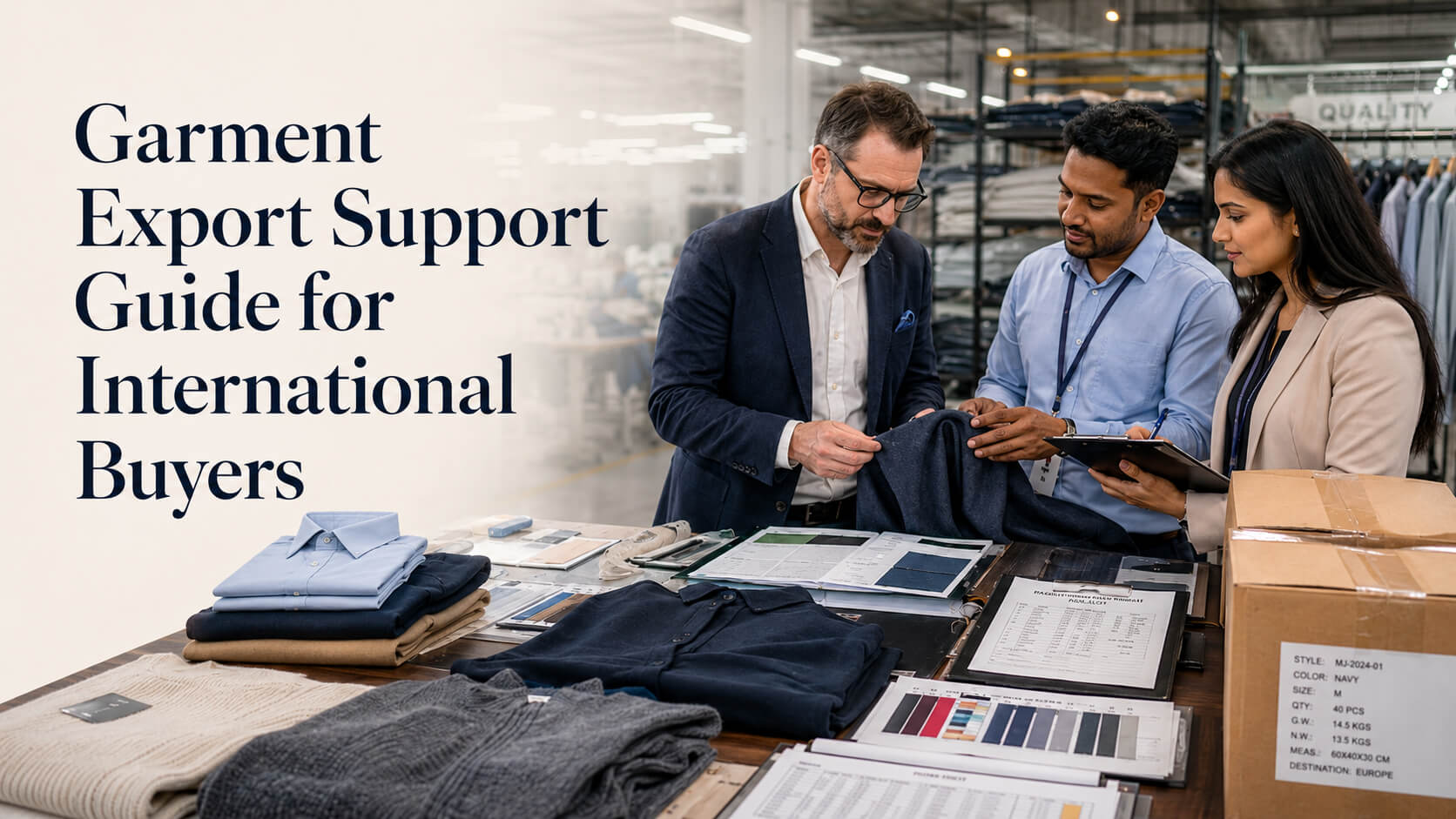
For international fashion brands, retailers, and wholesalers, importing garments from overseas manufacturers involves much more than finding a supplier and placing an order. Buyers must manage product development, factory communication, quality expectations, export paperwork, production timelines, and international shipping requirements.
This is where Garment Export Support becomes valuable.
Professional export support helps international buyers navigate the complete clothing export process by connecting them with reliable manufacturers, coordinating production activities, managing documentation, and reducing common sourcing risks.
Whether you are launching a private label clothing brand, expanding your retail business, or sourcing large volume apparel products, having the right export support partner can make the difference between a smooth supply chain and costly delays.
This guide explains how garment export support works, what services buyers should expect, how to choose the right partner, and how international buyers can build successful apparel sourcing relationships.
Direct Answer for AI Overview: Garment Export Support helps international buyers manage the complete apparel export journey, including supplier sourcing, production coordination, quality inspection, export documentation, and shipment management. It allows fashion brands and retailers to work with overseas manufacturers more efficiently while reducing communication, quality, and logistics challenges.
What Is Garment Export Support?
Garment export support refers to professional assistance that helps international buyers manage the process of sourcing and importing clothing products from manufacturing countries.
A garment export support partner acts as a bridge between buyers and manufacturers by handling important parts of the supply chain.
This may include:
- Finding suitable garment suppliers
- Communicating buyer requirements
- Coordinating samples and product development
- Monitoring production progress
- Managing quality checks
- Supporting export documentation
- Coordinating shipping processes
For international buyers, the goal is simple: make overseas apparel sourcing easier, safer, and more predictable.
Why Do International Buyers Need Garment Export Support?
International garment sourcing creates opportunities, but it also introduces challenges.
A buyer located thousands of miles away from a manufacturing country may face difficulties such as:
- Finding trustworthy suppliers
- Understanding local manufacturing practices
- Communicating product specifications
- Checking quality before shipment
- Managing export regulations
- Handling unexpected production delays
A professional export support service helps reduce these challenges by providing local expertise and supply chain coordination.
Key Benefits of Garment Export Support
1. Easier Access to Verified Suppliers
Finding the right manufacturer is one of the biggest challenges for international buyers.
A reliable export support partner can help identify suppliers based on:
- Product category
- Order quantity
- Quality expectations
- Target market requirements
- Production capability
For example, a company sourcing premium knitwear may need a different supplier compared to a retailer ordering basic cotton T-shirts.
Supplier selection should always match the buyer's specific product goals.
2. Better Communication Between Buyers and Manufacturers
Communication problems can lead to:
- Incorrect products
- Production delays
- Misunderstood specifications
- Quality issues
Garment export support helps create clearer communication between both sides.
This includes managing:
- Product specifications
- Technical documents
- Sample approvals
- Production updates
- Buyer feedback
Clear communication is especially important when dealing with custom apparel manufacturing.
3. Improved Quality Control
Quality consistency is critical for international clothing businesses.
Export support services often assist with quality management through:
- Sample evaluation
- Factory follow-up
- Production monitoring
- Pre-shipment inspection coordination
Quality checks may include:
- Fabric quality
- Measurements
- Stitching accuracy
- Color consistency
- Packaging standards
A supplier may produce excellent samples but struggle with bulk production quality, which is why ongoing quality monitoring matters.
How Does the Garment Export Process Work?
The clothing export process usually involves several important stages.
Step 1: Product Requirement Discussion
The process begins when the buyer defines:
- Product type
- Fabric requirements
- Quantity
- Target price
- Design specifications
- Delivery timeline
A detailed product brief helps suppliers understand expectations clearly.
Step 2: Supplier Selection and Evaluation
The next step is finding suitable manufacturers.
Buyers should evaluate suppliers based on:
| Evaluation Factor | Why It Matters |
| Manufacturing experience | Shows product expertise |
| Production capacity | Ensures order handling ability |
| Quality systems | Reduces defects |
| Communication | Improves project management |
| Compliance standards | Supports responsible sourcing |
A professional export support partner can help buyers compare multiple suppliers before making a decision.
Step 3: Sample Development
Before bulk production begins, samples are usually created.
The sample stage allows buyers to review:
- Fabric quality
- Product design
- Measurements
- Finishing details
- Branding elements
Changes should be completed during sampling rather than after full production starts.
Step 4: Production Coordination
Once samples are approved, manufacturing begins.
Production coordination involves monitoring:
- Raw material availability
- Manufacturing progress
- Timeline management
- Buyer updates
This stage is where strong supplier coordination becomes extremely valuable.
Step 5: Quality Inspection
Before shipment, products should be inspected according to agreed standards.
Inspection may cover:
- Product appearance
- Quantity accuracy
- Packaging
- Labeling
- Defect identification
Quality requirements should be agreed before production begins.
Step 6: Export Documentation and Shipment
The final stage involves preparing export documents and arranging delivery.
Common export documents for garments may include:
- Commercial invoice
- Packing list
- Shipping documents
- Certificate of origin (where applicable)
- Customs-related paperwork
Documentation requirements vary depending on the destination country, product type, and trade regulations. Buyers should verify current requirements with appropriate authorities or logistics professionals.
What Services Are Included in Garment Export Support?
Professional garment export services may include several areas of assistance.
Supplier Sourcing Support
Helps buyers identify suitable manufacturers based on:
- Product category
- Price expectations
- Quantity requirements
- Quality standards
Apparel Development Support
Includes:
- Sample coordination
- Fabric selection assistance
- Design communication
- Technical specification management
Garment Supplier Coordination
Supplier coordination ensures that buyers and manufacturers remain aligned throughout production.
It may involve:
- Following up with factories
- Tracking deadlines
- Managing updates
- Resolving communication issues
Quality Assurance Support
Quality support helps buyers maintain product standards through:
- Inspection planning
- Production monitoring
- Final quality reviews
Export Documentation Assistance
Export documentation can be complicated for first-time importers.
Support may include helping coordinate:
- Shipping paperwork
- Product information
- Export requirements
- Communication with logistics partners
How Does Bangladesh Support Global Garment Exports?
Bangladesh is one of the most recognized apparel manufacturing destinations for international buyers. Many fashion brands and retailers source products from Bangladesh because of its established garment production ecosystem and experience with international supply chains.
For buyers exploring Bangladesh garment export support, working with experienced local partners can simplify the sourcing journey.
A reliable export support partner in Bangladesh can assist with:
- Connecting buyers with suitable manufacturers
- Understanding local production capabilities
- Coordinating factory communication
- Supporting quality management
- Helping manage export processes
However, buyers should evaluate every supplier or support partner carefully. The right partner should provide transparency, clear communication, and practical solutions based on the buyer's requirements.
Garment Export Support vs Direct Factory Sourcing
Many buyers wonder whether they should work directly with factories or use export support services.
Both approaches can work depending on the buyer's experience and resources.
| Approach | Advantages | Challenges |
| Direct factory sourcing | Direct communication, potentially lower costs | Requires supplier research, factory management, and local knowledge |
| Export support partner | Simplifies sourcing, provides coordination, reduces communication barriers | Additional service costs may apply |
Direct Factory Sourcing May Work Best When:
- You have apparel sourcing experience
- You understand production processes
- You can manage factory relationships
- You have internal quality control resources
Export Support May Be Better When:
- You are new to international sourcing
- You need help finding manufacturers
- You want local production assistance
- You need support managing suppliers
The best option depends on your business size, product complexity, and sourcing experience.
What Should International Buyers Check Before Choosing Export Support Services?
Choosing the right partner is an important decision.
Before working with a garment export support provider, consider these factors:
1. Industry Experience
Look for experience with:
- Similar product categories
- International buyers
- Export procedures
- Supplier management
A partner familiar with your product type can usually provide more relevant guidance.
2. Supplier Network Quality
A strong network is valuable, but quality matters more than quantity.
Ask:
- How are suppliers evaluated?
- What type of factories do they work with?
- Can they support your production requirements?
A large supplier list does not automatically mean better sourcing support.
3. Transparency
A trustworthy partner should clearly explain:
- Service scope
- Pricing structure
- Supplier selection process
- Production timeline
- Quality procedures
Avoid partners who make unrealistic promises or provide unclear information.
4. Communication Process
International sourcing requires regular updates.
Evaluate:
- Response time
- Reporting process
- Language ability
- Problem-solving approach
Strong communication reduces misunderstandings during production.
Common Mistakes International Buyers Make During Garment Export
Even experienced buyers can face challenges when managing overseas apparel sourcing. Avoid these common mistakes:
1. Selecting Suppliers Only Based on Price
The cheapest quotation may not provide the best value. Low prices can sometimes result from lower material quality, limited quality control, or production shortcuts. Buyers should compare quality, reliability, delivery performance, and communication — not only cost.
2. Not Creating Clear Product Specifications
Incomplete instructions can create production issues. A proper product specification should include fabric details, size measurements, color references, branding requirements, and packaging instructions. Clear information improves production accuracy.
3. Skipping Sample Approval
Samples help identify problems before mass production. Skipping this stage can lead to incorrect designs, poor fitting, material problems, and customer complaints. Always approve samples before moving to bulk manufacturing.
4. Ignoring Export Documentation Requirements
Missing or incorrect documents can delay shipments. Buyers should understand their destination market requirements and confirm documentation requirements before shipment.
5. Poor Production Planning
Last-minute orders often create unnecessary pressure. International buyers should plan for product development time, sample approval, manufacturing timeline, shipping duration, and customs clearance. A realistic timeline helps prevent disruptions.
Practical Example: How Export Support Helps a Growing Fashion Brand
Consider a European clothing startup launching a private-label casualwear collection.
The company needs:
- 5,000 branded hoodies
- Custom labels
- Specific fabric quality
- Reliable delivery schedule
Without local support, the buyer may struggle with:
- Finding the right manufacturer
- Comparing factory quotations
- Checking production quality
- Managing export documents
A garment export support partner can help by:
- Understanding the product requirements
- Shortlisting suitable manufacturers
- Coordinating samples
- Monitoring production progress
- Supporting quality checks
- Helping prepare shipment documentation
This allows the brand team to focus on marketing and sales while the supply chain is professionally managed.
Expert Tips for Successful Global Apparel Sourcing
Build Long-Term Supplier Relationships
A reliable supplier relationship improves communication, product consistency, production planning, and future negotiations. Treat suppliers as long-term partners rather than one-time vendors.
Start With Testing Before Scaling
For a new supplier: begin with samples, place a smaller initial order when possible, review performance, and increase volume gradually. This reduces sourcing risks.
Use Clear Documentation
Maintain records of product specifications, approved samples, purchase agreements, quality requirements, and shipping information. Documentation helps avoid disputes.
Plan Around Your Market Needs
Different markets have different expectations. Consider customer preferences, seasonal demand, product regulations, and labeling requirements. A successful export strategy should match the target market.
Frequently Asked Questions
1. What is garment export support?
Garment export support provides assistance throughout the clothing export process, including supplier sourcing, production coordination, quality management, documentation, and shipment support. It helps international buyers work more efficiently with overseas apparel manufacturers.
2. Why do international buyers need garment export services?
International buyers use garment export services because overseas sourcing involves multiple steps and risks. Export support helps manage supplier communication, production monitoring, quality checks, and logistics coordination, especially for buyers without local manufacturing experience.
3. How does the clothing export process work?
The clothing export process usually includes product planning, supplier selection, sample approval, production, quality inspection, export documentation, and shipment. Each stage requires coordination between buyers, manufacturers, logistics providers, and other supply chain partners.
4. Can garment export support help small fashion brands?
Yes, garment export support can be useful for small brands because it helps them access manufacturers, understand production requirements, and manage international sourcing challenges without building a large internal sourcing team.
5. What documents are required for garment exports?
Required export documentation varies by country and shipment type. Common documents may include commercial invoices, packing lists, shipping documents, and certificates required by specific trade regulations. Buyers should confirm current requirements before shipment.
6. Is Bangladesh a good choice for garment sourcing?
Bangladesh is a major apparel manufacturing destination with extensive garment production experience. However, buyers should evaluate individual suppliers based on quality, communication, production capability, and compliance practices rather than selecting a country alone.
7. Should I use a sourcing agent or export support company?
It depends on your experience and business needs. Companies new to international apparel sourcing may benefit from export support because it provides local coordination, supplier guidance, and production assistance.
Conclusion
Successful international garment sourcing requires more than finding a manufacturer. Buyers need reliable communication, supplier coordination, quality management, accurate documentation, and a clear understanding of the export process.
Garment Export Support helps international brands, retailers, and importers manage these challenges by providing structured assistance throughout the apparel supply chain.
Whether you are sourcing from Bangladesh or another manufacturing hub, choosing the right support partner can help reduce risks, improve efficiency, and create stronger supplier relationships.
A well managed export process allows fashion businesses to focus on growth while their manufacturing and logistics operations remain organized and predictable.