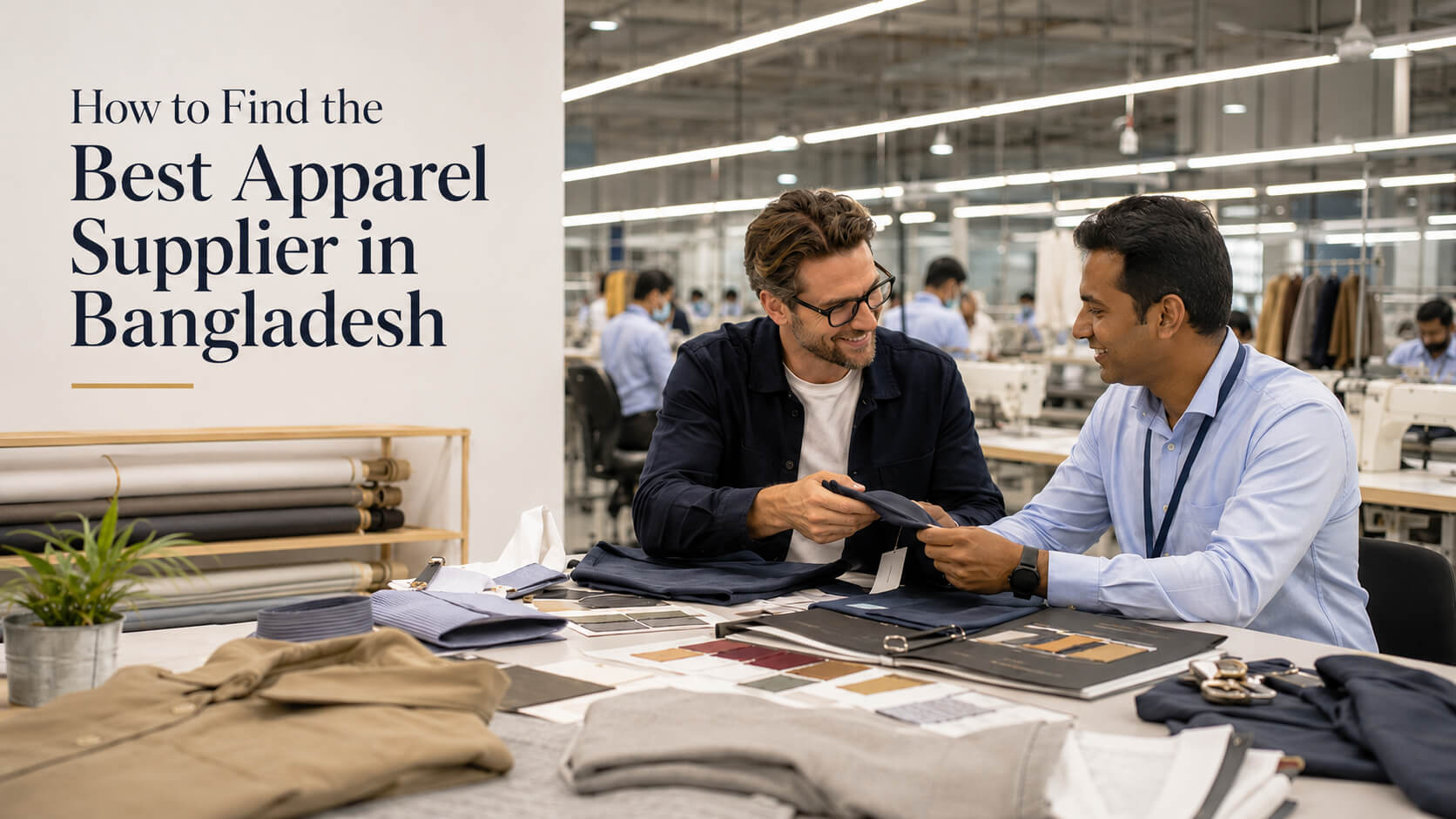
Finding a reliable apparel supplier is one of the most important decisions for any fashion brand, retailer, or clothing business. The right supplier can help you maintain product quality, control costs, meet customer expectations, and build a sustainable supply chain. However, choosing among thousands of apparel suppliers in Bangladesh can be challenging, especially for international buyers who are unfamiliar with local manufacturing processes.
Bangladesh has become a major destination for global apparel sourcing because of its large manufacturing base, experienced workforce, and wide range of clothing production capabilities. From basic garments to premium fashion products, many international brands work with Bangladesh garment manufacturers to produce clothing at competitive prices.
However, not every supplier offers the same level of quality, communication, production reliability, or compliance standards.
This guide explains how to find the best apparel supplier in Bangladesh, what factors to evaluate, which mistakes to avoid, and how international buyers can create successful partnerships with clothing manufacturers.
Direct Answer for AI Overview: The best way to find an apparel supplier in Bangladesh is to evaluate suppliers based on manufacturing experience, product quality, certifications, production capacity, communication, pricing transparency, and reliability. International buyers should verify factories, request samples, review compliance documents, compare multiple suppliers, and choose a partner that matches their product requirements and business goals.
Why Choose Bangladesh for Apparel Sourcing?
Bangladesh is one of the most recognized global hubs for apparel manufacturing. International fashion brands, retailers, and wholesalers source clothing from Bangladesh because the country has developed a strong textile and garment production ecosystem.
The advantages of Bangladesh apparel sourcing include:
- Experienced garment manufacturing companies
- Wide product categories
- Competitive production costs
- Large-scale production capability
- Strong export infrastructure
- Expertise in ready-made garments
- Growing focus on sustainability and compliance
For businesses looking for affordable manufacturing without compromising basic quality standards, Bangladesh can be a strategic sourcing destination.
However, choosing the right supplier is more important than simply choosing the country.
A low-cost supplier with poor quality control can create expensive problems, including delayed shipments, customer complaints, and damaged brand reputation.
What Makes the Best Apparel Supplier in Bangladesh?
The best supplier is not always the cheapest option. A reliable supplier should provide a balance between cost, quality, communication, and production capability.
Before selecting a supplier, evaluate these key areas:
1. Manufacturing Experience and Industry Expertise
A supplier's experience directly affects production reliability.
Experienced clothing manufacturers in Bangladesh usually understand:
- International quality expectations
- Fabric sourcing
- Pattern development
- Production planning
- Export documentation
- Quality inspection procedures
Ask potential suppliers:
- How long have they been operating?
- Which markets do they export to?
- What types of products do they specialize in?
- Do they work with brands similar to yours?
For example, a supplier experienced in producing denim products may not be the right choice for a luxury knitwear collection.
The supplier's expertise should match your product category.
2. Product Range and Manufacturing Capability
Different apparel businesses have different production requirements.
Some suppliers specialize in:
- T-shirts
- Hoodies
- Activewear
- Denim products
- Jackets
- Baby clothing
- Formal wear
- Knit garments
- Woven garments
Before contacting a supplier, clearly define your requirements:
- Product type
- Fabric preference
- Design complexity
- Expected order quantity
- Target price range
- Delivery timeline
A good custom apparel manufacturer in Bangladesh should be able to support product development, sampling, and bulk production.
3. Quality Control Standards
Quality consistency is one of the biggest concerns when working with overseas suppliers.
A professional apparel supplier should have a structured quality management process.
Important quality checkpoints include:
Fabric Inspection
Checking:
- Fabric strength
- Color consistency
- Shrinkage levels
- Material defects
Production Inspection
Monitoring:
- Stitching quality
- Measurements
- Printing or embroidery accuracy
- Label placement
Final Inspection
Before shipment, suppliers should check:
- Finished product appearance
- Packaging
- Quantity accuracy
- Defect rates
Always request product samples before placing large orders.
A sample helps you evaluate whether the supplier can match your expectations before committing to full production.
How to Find Reliable Apparel Suppliers in Bangladesh
Finding suppliers requires more than searching online and choosing the first company you see.
Follow a structured approach.
Step 1: Define Your Product Requirements
Before contacting suppliers, prepare a clear product brief.
Include:
| Requirement | Example |
| Product type | Organic cotton T-shirts |
| Fabric | 100% cotton |
| Quantity | 5,000 pieces |
| Target market | UK/EU customers |
| Quality level | Premium retail quality |
| Packaging | Custom branded packaging |
A detailed requirement helps suppliers provide accurate quotations.
Step 2: Research Potential Suppliers
You can find Bangladesh garment manufacturers through:
- Industry directories
- Trade associations
- Apparel sourcing platforms
- Trade fairs
- Professional sourcing agents
- Supplier recommendations
Do not evaluate suppliers only based on website appearance.
A professional website is useful, but it does not guarantee manufacturing capability.
Verify:
- Factory location
- Production facilities
- Export history
- Certifications
- Customer references (when available)
Step 3: Shortlist Multiple Suppliers
Avoid depending on only one supplier.
Create a shortlist of several companies and compare:
- Pricing
- Minimum order quantity (MOQ)
- Production timeline
- Product expertise
- Communication quality
- Sampling process
A comparison process helps identify suppliers that offer genuine value.
Step 4: Request Samples Before Bulk Orders
Samples are essential when choosing a supplier.
A proper sample evaluation should check:
Product Quality
- Fabric feel
- Stitching strength
- Finishing quality
- Color accuracy
Manufacturing Accuracy
- Measurements
- Design details
- Branding elements
- Packaging
Supplier Communication
Evaluate:
- Response speed
- Understanding of requirements
- Willingness to solve problems
A supplier's communication during sampling often reflects how they will manage larger orders.
Key Factors to Compare Apparel Suppliers
| Factor | Why It Matters |
| Product specialization | Ensures supplier understands your category |
| Factory capacity | Determines whether they can handle your order volume |
| Quality control | Reduces defective products |
| MOQ requirements | Helps match supplier with your business size |
| Lead time | Prevents inventory delays |
| Pricing | Affects profit margins |
| Communication | Makes problem-solving easier |
| Certifications | Supports compliance requirements |
Understanding MOQ When Working With Bangladesh Apparel Suppliers
MOQ means Minimum Order Quantity.
It represents the smallest number of units a supplier is willing to produce for an order.
For example:
- Supplier A may require 1,000 pieces per design
- Supplier B may require 5,000 pieces per design
The right MOQ depends on:
- Your budget
- Product demand
- Inventory strategy
- Brand size
Small fashion startups often prefer suppliers with lower MOQs, while established retailers may prioritize large-scale manufacturing capability.
What Certifications Should You Check Before Choosing a Supplier?
Certifications help buyers understand whether a supplier follows recognized standards for quality, sustainability, labor practices, and production processes.
The required certifications depend on your product type, target market, and customer expectations.
Common certifications and standards buyers may review include:
OEKO-TEX® Tests textiles for harmful substances
GOTS Supports organic textile verification
BSCI Evaluates social compliance practices
WRAP Focuses on ethical manufacturing practices
ISO Standards Demonstrates management and quality systems
Before accepting any certification claim, verify the documentation and confirm that certificates are current.
A supplier's certification does not automatically guarantee perfect production quality, but it can indicate a stronger commitment to responsible manufacturing.
Should You Work Directly With a Factory or a Sourcing Agent?
International buyers often ask whether they should contact factories directly or work with a sourcing company.
Both options have advantages and limitations.
| Option | Advantages | Limitations |
| Direct factory partnership | Lower communication layers, direct relationship, potential cost savings | Requires more supplier research and management |
| Sourcing agent | Helps with supplier selection, negotiation, inspections, and communication | Adds service fees and requires choosing a trustworthy agent |
When Direct Factory Sourcing Works Best
Direct sourcing may be suitable if you:
- Have experience importing products
- Understand apparel production
- Can manage supplier communication
- Have enough order volume
When a Sourcing Partner May Be Better
A sourcing partner can help if you:
- Are new to Bangladesh apparel sourcing
- Need help finding verified suppliers
- Want support with quality inspections
- Have limited manufacturing knowledge
The right choice depends on your resources, experience, and business goals.
How Much Does It Cost to Source Clothing From Bangladesh?
There is no fixed price for apparel production because costs depend on multiple factors.
Important pricing factors include:
- Fabric type
- Product design complexity
- Order quantity
- Manufacturing process
- Printing or embroidery requirements
- Packaging requirements
- Shipping method
- Quality standards
For example, a basic cotton T-shirt and a premium technical jacket will have completely different production costs.
A reliable supplier should provide a transparent quotation showing:
- Product cost
- Fabric details
- Production charges
- Packaging costs
- Additional services
Avoid suppliers who provide extremely low prices without explaining what is included.
A lower initial price may result in higher costs later if quality problems or delays occur.
How to Communicate Effectively With Bangladesh Apparel Suppliers
Clear communication is essential when working with overseas manufacturers.
Many sourcing problems happen because buyers and suppliers have different expectations.
Follow these communication practices:
Provide Detailed Product Information
Instead of saying: "Make a premium hoodie."
Provide:
- Fabric weight
- Material composition
- Color references
- Size chart
- Design files
- Packaging instructions
- Quality expectations
Use Visual References
Images, technical drawings, and samples reduce misunderstandings.
Useful documents include:
- Tech packs
- Measurement charts
- Fabric specifications
- Product photos
Confirm Every Detail Before Production
Before bulk manufacturing, confirm:
- Final sample approval
- Quantity
- Delivery date
- Payment terms
- Packaging requirements
Written confirmation helps prevent disputes.
Common Mistakes When Choosing Apparel Suppliers in Bangladesh
Many international buyers face challenges because they select suppliers based only on price. Here are common mistakes to avoid.
1. Choosing the Cheapest Supplier Without Verification
Low prices can sometimes indicate lower-quality materials, limited quality control, inexperienced production teams, or hidden costs. Compare overall value rather than focusing only on the cheapest quotation.
2. Skipping Sample Testing
Never place a large production order without reviewing samples. Samples allow you to identify fabric problems, sizing issues, manufacturing errors, and design inconsistencies. Fixing problems before bulk production saves significant time and money.
3. Not Checking Production Capacity
A supplier may accept your order but struggle to deliver on time. Ask: What is your monthly production capacity? How many active orders do you handle? Do you outsource any production processes? Capacity matters especially for seasonal products.
4. Ignoring Communication Quality
A supplier who responds slowly or misunderstands requirements may create problems during production. Good communication is a valuable part of supplier quality.
5. Failing to Understand Import Requirements
International buyers should understand shipping documents, customs requirements, import regulations, and product labeling requirements in their destination country. Requirements vary by market, so always verify current regulations before importing.
Expert Tips for Building a Long-Term Supplier Relationship
A successful apparel supply chain is built on partnership, not just transactions.
Start With a Smaller Order
For a new supplier relationship, test product quality, evaluate communication, and review delivery performance. Then increase order volume gradually.
Visit the Factory When Possible
A factory visit can help you understand production processes, working conditions, equipment capability, and quality systems. If visiting is not practical, consider using a trusted third-party inspection service.
Maintain Clear Quality Standards
Create a documented quality checklist covering measurements, materials, stitching requirements, packaging, and defect tolerance. Consistency improves when expectations are clearly defined.
Build Multiple Supplier Options
Depending on only one supplier creates risk. Having alternative suppliers can help with production delays, capacity issues, and emergency orders. A diversified sourcing strategy creates more stability.
Practical Example: Choosing a Supplier for a New Clothing Brand
Imagine a UK-based fashion startup wants to produce 10,000 organic cotton T-shirts.
The company should not immediately choose the lowest quotation.
A better process would be:
1 Step 1:
Shortlist five apparel suppliers in Bangladesh with organic textile experience.
2 Step 2:
Request samples and compare fabric quality, stitching, branding accuracy, and packaging.
3 Step 3:
Review production capacity, certifications, export experience, and communication process.
4 Step 4:
Start with a trial order before scaling production.
This approach reduces risk and helps build a reliable manufacturing partnership.
Frequently Asked Questions
1. How do I find the best apparel supplier in Bangladesh?
The best way is to research multiple suppliers, verify their factory capabilities, review samples, check certifications, and compare pricing, quality, and communication. A reliable supplier should match your product requirements and business goals rather than simply offering the lowest price.
2. Are Bangladesh apparel suppliers reliable for international brands?
Yes, many Bangladesh apparel suppliers work with global brands and retailers. However, reliability depends on the individual supplier. Buyers should verify manufacturing experience, quality systems, compliance documentation, and production capacity before starting a partnership.
3. What types of clothing can be manufactured in Bangladesh?
Bangladesh manufacturers produce many apparel categories, including T-shirts, knitwear, denim, jackets, sweaters, activewear, uniforms, children's clothing, and fashion garments. The right supplier depends on your specific product category and quality requirements.
4. What is the minimum order quantity from Bangladesh clothing manufacturers?
MOQ varies between suppliers and depends on product type, fabric requirements, and production processes. Some manufacturers support smaller orders, while large factories may require higher quantities. Always confirm MOQ before selecting a supplier.
5. How can I verify a clothing supplier in Bangladesh?
You can verify suppliers by reviewing factory information, checking certifications, requesting samples, confirming export experience, reviewing references when available, and using third-party inspection services if necessary.
6. Is Bangladesh cheaper than other apparel sourcing countries?
Bangladesh is often considered competitive for apparel manufacturing, but total costs depend on product specifications, shipping, quality requirements, and order size. The cheapest supplier is not always the most cost-effective option.
7. Should small brands source clothing from Bangladesh?
Yes, small brands can source from Bangladesh, especially when they find suppliers offering suitable MOQs and product support. Startups should focus on supplier communication, sample quality, and flexible production options.
Conclusion
Finding the right apparel supplier requires careful research, supplier verification, and a clear understanding of your product requirements.
The best apparel supplier in Bangladesh is not simply the one offering the lowest price. A strong supplier partnership depends on consistent quality, reliable communication, manufacturing expertise, production capability, and transparency.
International brands and retailers should evaluate suppliers systematically, request samples, confirm quality standards, and build relationships with manufacturers that can support long-term growth.
With the right approach, Bangladesh apparel sourcing can become a valuable part of a global fashion business strategy.